

Recommended


The Day of the Dead is one of Mexico's most representative celebrations and a tradition that gathers families every year to remember and honor those who have already departed.
Through altars filled with flowers, candles, photographs, and food, millions of people keep the bond with their loved ones alive in a festivity where pre-Hispanic roots and Catholic customs coexist.
Although the most well-known dates are November 1st and 2nd, tradition establishes a broader calendar to receive different souls. Therefore, many families begin preparing their offerings several days earlier with the goal of welcoming each soul on its designated day.
What do November 1st and 2nd mean?
November 1st is celebrated as All Saints' Day, a date dedicated mainly to deceased children, also known as "Angelitos" (Little Angels).
For its part, November 2nd commemorates All Souls' Day, a day when the deceased adults are remembered. It is the central day of the celebration and when many families visit cemeteries to bring flowers and symbolically share time with their loved ones.
According to popular belief, during these days, spirits return temporarily to their homes to enjoy the offerings prepared in their honor.
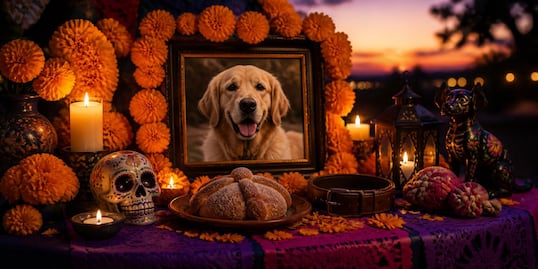
Day of the Dead 2026 Calendar: Which souls arrive each day?
Mexican tradition marks specific dates to receive different groups of the deceased:
October 27th: Dedicated to pets that have passed away and were once part of the family.
October 28th: The day to remember people who died in a tragic or violent manner.
October 29th: Honoring those who died by drowning or in accidents.
October 30th: The date is reserved for lonely souls, those who have no family members to remember them or place an offering for them.
October 31st: Remembering children who died before being baptized, traditionally known as "limbos."
November 1st: Corresponds to All Saints' Day and is dedicated to deceased children and babies, also called "Angelitos."
November 2nd: Celebrating All Souls' Day, when the adults who have departed are remembered. It is the main date of the Day of the Dead.
When should the offering be set up?
The placement of the altar depends on the tradition followed by each family and the type of tribute they wish to perform.
If the deceased person falls into one of the categories remembered on October 28th, 29th, 30th, or 31st, many people set up the offering on those dates to receive the souls from their arrival.
In other cases, the altar may be set up until the morning of November 2nd, the day dedicated to All Souls. It is also common to set it up starting November 1st to keep it for a longer time and enjoy the traditional decoration.
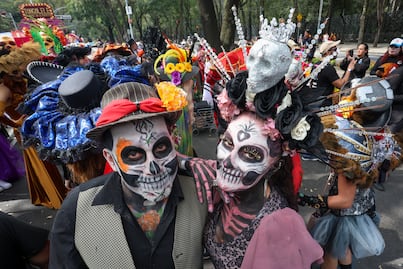
A tradition with pre-Hispanic and Catholic roots
UNESCO recognizes the Day of the Dead as Intangible Cultural Heritage of Humanity because it represents a unique fusion between ancient indigenous beliefs and religious traditions introduced during the colonial era.
Before the arrival of the Spanish, the native peoples were accustomed to placing various objects next to the deceased that they might need on their journey to the underworld. Over the centuries, these practices mixed with altars, religious images, and other Catholic elements, giving rise to the offerings we know today.
Main elements of a Day of the Dead offering
Water: Represents life and helps souls quench their thirst after their long journey.
Salt: Considered an element of purification and protection during the journey of the deceased.
Candles and votives: Symbolize light, hope, and faith. They also serve to light the path back home.
Copal and incense: Used to purify the environment and ward off negative energy.
Cempasúchil flower: According to tradition, its color and aroma serve to guide souls toward the offering through paths of petals.
Petate (woven mat): Placed so that the deceased can rest during their visit.
Pan de muerto (bread of the dead): One of the most recognizable symbols of the celebration and an essential part of the offering.
Photographs: Used to identify the person to whom the altar is dedicated and to keep their memory alive.
Water-based chocolate: An element related to ancient pre-Hispanic traditions linked to hospitality and paying homage to the deceased.
Sugar skulls: Remind us of the constant presence of death within the Mexican worldview.
What do the levels of the altar mean?
Altars can have different levels, each with a particular symbolism:
Two levels: represent heaven and earth.
Three levels: symbolize heaven, earth, and the underworld.
Seven levels: represent the stages that, according to tradition, souls traverse before reaching eternal rest.
Beyond its regional variations, the Day of the Dead remains a celebration that honors memory, identity, and the connection between generations. Each flower, candle, and photograph placed on the offering reminds us that, for millions of Mexicans, loved ones never truly leave as long as they remain in memory.
Be part of our WhatsApp channel. VIVE USA is now available! Stay informed from your mobile device about the most relevant news regarding travel, work, life in the United States and Canada, celebrities, trends, and much more.

[Publicidad]