

Recommended

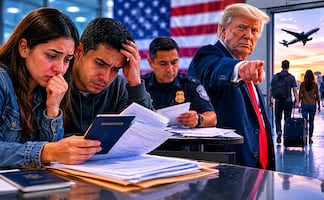
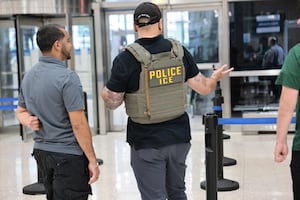
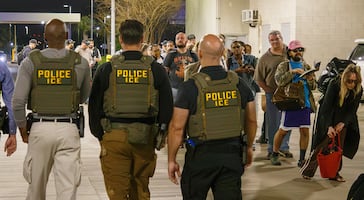
A federal judge ordered immigration agents on Wednesday not to carry out arrests without a judicial warrant, unless they first determine that there is a likelihood that the person will escape before such a warrant can be obtained.
Judge Maame Ewusi-Mensah Frimpong of the U.S. District Court for the Central District of California issued the preliminary injunction for detentions in the Los Angeles metropolitan area.
Frimpong also certified a class action lawsuit that seeks to represent individuals who, since June 6, 2025, have been or will be arrested for alleged immigration violations, without a judicial warrant and without an individualized assessment of flight risk.
"This ruling is one of the most important decisions to date in the community's efforts to end the federal government's cruel and illegal practice of kidnapping people and separating them from their families," said Mayra Joachin, lead attorney for the American Civil Liberties Union of Southern California, in a statement.
The attorney highlighted that the court order “should put an end” to hundreds of illegal arrests that continue to occur throughout Southern California.
“We will closely monitor compliance with this court order and we expect the federal government to abide by it,” she added.
The lawsuit filed in June of last year alleges that the Department of Homeland Security (DHS) has “kidnapped and disappeared” members of the community through illegal detention and arrest practices, based on their skin color.
In this regard, Michel Wilfong, an attorney for the National Day Laborer Organizing Network (NDLON), said that the Administration of President Donald Trump discarded federal law to achieve its goal of mass deportation at any cost.
The initial plaintiffs, five detained workers and four organizations —the Los Angeles Day Laborer Center, the United Farm Workers (UFW), the Coalition for Humane Immigrant Rights (CHIRLA), and the Immigrant Defenders Law Center—, argue that the Trump Administration has “unconstitutionally” arrested and detained people to meet an “arbitrary” arrest quota.
Under federal law, immigration agents can only perform a civil arrest for immigration reasons without a warrant when they have probable cause to believe both that a person is undocumented and that they are likely to flee before a warrant can be obtained.
Evidence in the case showed that nearly 80% of a sample of 113 arrest records submitted by immigration agents lacked an individual assessment of flight risk or were based primarily on generic language.
Under oath, immigration authorities asserted that they do not arrest people without first assessing that risk. However, agents often omit questions to detainees about employment, family, housing, and other ties to the community that reduce the possibility of flight, according to the plaintiffs. EFE

[Publicidad]