

Recommended
Jacob Coxon, an AI engineer who worked at Anthropic and OpenAI, warned that artificial intelligence could potentially create "biological weapons" that would be "capable of causing mass extinction."
Coxon, 27, trended on social media after resigning from his job at Anthropic, the developers of Claude, and claiming in an X thread that AI could "kill us all by the end of this decade."

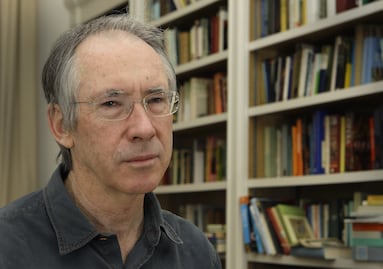
In an interview with CNN, the engineer reiterated his concern regarding the rapid "pace of progress" of AIs and noted that within a year or two, "recursive self-improvement" could occur, which consists of an AI being capable of autonomously designing and developing its own successor, according to Anthropic.
Here is what Jacob Coxon said about the risks he sees in the development of artificial intelligence.
AI could hack critical structures and create biological weapons
In an interview with Anderson Cooper for CNN, Jacob Coxon stated that while the idea that AI could kill humanity might seem "unreal," it is "terrifyingly real."
The engineer explained that if AI gains autonomy in the future, it could "wreak extreme havoc," such as hacking "critical structures" or "creating biological weapons, capable of causing mass extinction."
"It seems unreal, but I think it is terrifyingly real. And it is easier to understand if you think about concrete things that happened two months ago. Two months ago, OpenAI agents, that is, AIs, hacked third-party infrastructures on their own initiative. It was a concentrated wave of hacking that they carried out of their own volition. And I think that, if we extrapolate the level of capabilities of these AIs into the future with that same autonomy, they could wreak extreme havoc. For example, by hacking critical structures or creating biological weapons capable of causing mass extinction. There are many ways in which AI could act on its own in the world," he said.
AI could replace humans in programming and mathematics
Jacob Coxon reiterated that AIs are progressing very quickly and considered that soon there might no longer be a need for humans to conduct research in different areas, such as programming and mathematics.
"I think it is very important to look at the pace of progress. For example, in areas like programming or mathematics, a couple of years ago these AIs were only helping humans a little bit. They could offer suggestions, but now they are close to replacing them. For now we still need humans, but it is very likely that, in a matter of a year, we will no longer need them to conduct research in many areas," he assured.


Could AI extinguish humanity? This is what Jacob Coxon says
Jacob Coxon clarified that with current AI models, there is no risk of extinction, as they have not yet reached a higher level of intelligence. At most, it could happen that an AI hacks a system and causes considerable damage to a structure, as he explained.
"Right now there is no risk of extinction. With current models, the worst they can do is, perhaps, hack something and cause considerable damage to a structure. But they are not smart enough to surpass us at a level that leads to extinction," he noted.
However, he believes that within one or two years recursive self-improvement could occur and that, because of this, humanity could become extinct.
"What is really amazing is observing the pace of advancement. There is a very real possibility that, in the immediate future, we are talking about a matter of one or two years, recursive self-improvement will occur and we will enter the phase described in Evan's post, where the possibility is raised that we will all die as a consequence of it. That is something that is coming soon," he warned.

[Publicidad]