

Recommended



Every year, thousands of people apply for the B1/B2 U.S. tourist visa to travel to the United States for vacations, family visits, or temporary business. However, U.S. immigration law states that every non-immigrant visa applicant is considered a potential immigrant until they prove otherwise to the consular officer.
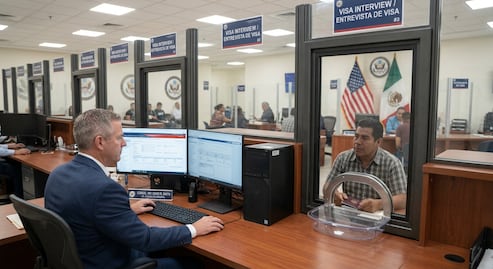
For this reason, during the interview, the consul evaluates multiple factors to determine if the trip is truly temporary and if the applicant will return to their country at the end of their stay. According to official information from the U.S. Department of State, these are some of the signs that can raise doubts or trigger alerts during the interview.
1. Failure to clearly explain the purpose of the trip
One of the most important aspects for the consular officer is to understand why you wish to travel to the United States. U.S. authorities point out that tourist visas are exclusively for permitted activities such as tourism, family visits, medical treatment, or certain temporary business trips.
If the answers are vague, contradictory, or do not match the information provided on the DS-160 form, the consul may question the true intent of the trip.
2. Having weak ties to your country of residence
The most frequent reason for non-immigrant visa denials is related to Section 214(b) of the Immigration and Nationality Act. According to the Department of State, the applicant must demonstrate the existence of strong ties that compel them to return to their country after the trip.
These ties may include:
- Empleo estable.
- Negocio propio.
- Estudios en curso.
- Familia inmediata.
- Compromisos financieros o profesionales relevantes.
When the officer considers these ties to be insufficient, they may conclude that there is a risk of overstaying in the United States.
3. Failure to demonstrate how the trip will be financed
The officer also seeks to determine if the applicant has the resources to cover transportation, lodging, food, and other travel expenses. Additionally, they analyze whether the budget is consistent with the duration and characteristics of the proposed trip.
If a person cannot explain who will pay for the trip or presents financial information inconsistent with their employment situation, this can raise questions during the evaluation.

4. Providing inconsistent information
Consular officials review the information presented in the DS-160 form and compare it with the answers provided in the interview. Inconsistencies regarding employment, income, travel history, marital status, or reasons for the trip can affect the applicant's credibility.
For this reason, authorities recommend always answering with honesty and precision.
5. Hiding information or presenting false data
The U.S. government takes any attempt at fraud or material misrepresentation in a visa application very seriously. Presenting forged documents, hiding important background information, or lying during the interview can lead not only to a denial but also to future immigration consequences.
The Department of State maintains specific programs to detect fraud in visa applications and emphasizes that false statements can be investigated and sanctioned.
6. Having a history of immigration non-compliance
Although each case is analyzed individually, immigration history is part of the consular evaluation. Staying longer than authorized on previous visits, violating visa conditions, or having records of non-compliance can negatively influence the decision.
Consular officers have access to previous immigration information and check if the applicant has respected the conditions of their previous trips.
7. Showing signs of intent to emigrate
U.S. law establishes that the burden of proving the temporary intent of the trip rests with the applicant. Therefore, comments related to looking for a job, moving permanently, or exploring opportunities to stay in the United States can raise concerns during the interview.
The purpose of the interview is precisely to determine if the person meets the requirements for a temporary visa and if they will return to their country once the authorized trip is concluded.
According to the U.S. Department of State, there is no magic formula for getting a visa. The officer makes a decision by considering the totality of the applicant's circumstances, including their family, professional, economic, and social ties, as well as the purpose of the trip and their ability to fund it.
Therefore, the best strategy is to present truthful information, maintain consistency between the form and the interview, and clearly demonstrate that the trip has a temporary and legitimate purpose.
Join our WhatsApp channel. VIVE USA is now available! Stay informed from your mobile device about the most relevant news regarding travel, work, life in the United States and Canada, celebrities, trends, and much more.

[Publicidad]