

Recommended
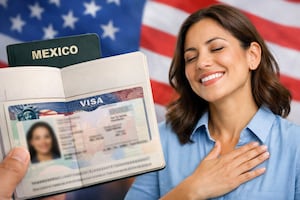

The United States and Mexico share a 3,152-kilometer border and a history deeply connected by the hundreds of thousands of Mexicans who have family members in the United States.
If you wish to visit a family member in the United States and you do not know which visa to request, you need the B1/B2 visa.
The B1/B2 visa, commonly known as a "tourist visa," is also valid for other travel purposes, such as a "temporary visit to family members." This means you can visit your family and return to Mexico before the stay period granted by the CBP consular officer at the port of entry expires.
Due to its temporary nature, the B1/B2 visa is a "non-immigrant" visa. If you wish to live permanently in the United States, your family member must sponsor you with an immigrant visa through a Green Card.

How do you apply for the B1/B2 visa to visit your family in the United States?
The first step is to complete the DS-160 application form. In this form, you must indicate that your reason for travel is to visit your family.
The United States and Mexico share a 3,152-kilometer border and a history deeply connected by the hundreds of thousands of Mexicans who have family members in the United States.
If you wish to visit a family member in the United States and do not know which visa to request, you need the B1/B2 visa.
The B1/B2 visa, commonly known as a "tourist visa," is also valid for other travel purposes, such as a "temporary visit to family members." This means you can visit your family and return to Mexico before the stay period granted by the CBP consular officer at the port of entry expires.
Due to its temporary nature, the B1/B2 visa is a "non-immigrant" visa. If you wish to live permanently in the United States, your family member must sponsor you with an immigrant visa through a Green Card.
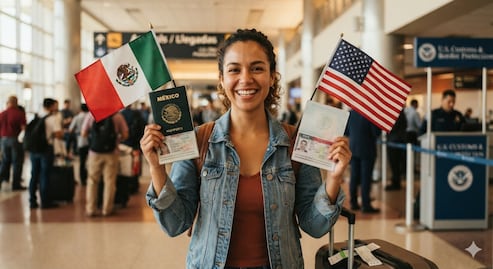
How do you apply for the B1/B2 visa to visit your family in the United States?
The first step is to complete the DS-160 application form. In this form, you must indicate that your reason for travel is to visit your family.
Here are the entry reasons permitted by the Department of State:
Business Category (B-1)
Consultation with business associates.
Attendance at a scientific, educational, or professional convention on a specific date.
Short-term professional training.
Business conference.
Settling an estate.
Negotiating a contract.
Participating in litigation.
Tourist Category (B-2)
Tourism: visits to theme parks, beaches, national parks, museums, lookout points, and any destination for comfort and entertainment.
Vacation.
Visits to friends or family. Be very specific with the CBP officer about your return date so they do not think you intend to stay and reside with your family members.
Shopping. This is a very common activity for those living on the border, as they often take advantage of sales and low prices at shopping centers in cities like McAllen, El Paso, and Tucson.
Medical treatment.
Participation in social events hosted by fraternal, social, or service organizations.
Amateur participation in musical, sports, or similar events or contests, provided they are not paid for participating.
Enrollment in a short recreational course of study, not for credit toward a degree (e.g., a two-day cooking class during vacation).
Join our WhatsApp channel. VIVE USA is now available! Stay informed on your mobile device about the most relevant news regarding travel, work, life in the United States and Canada, celebrities, trends, and much more.

[Publicidad]