

Recommended






Thai authorities state that they are monitoring reports regarding the death of a Russian woman from a possible case of pneumonic plague in Siberia, although there is currently no official confirmation of a prior trip by the deceased to the Asian country, as reported by Russian media.
In a statement, Thailand's Department of Disease Control (DDC) indicated that—like other countries—they are verifying and following up on the reports with the help of the World Health Organization (WHO).

Different versions of the possible origin are being circulated in Russia, although none are backed by official sources: that the patient contracted pneumonic plague, caused by a bacteria called 'Yersinia pestis', in Thailand, from where she had allegedly recently returned, or as a consequence of the accidental breaking of a test tube containing pathogens at her workplace.
Sources from the Thai Health and Foreign Affairs ministries told EFE on Wednesday that they still have no information on the woman's alleged visit to the country—which is visited by thousands of Russian tourists every year—and that they will share updates on the matter when available.
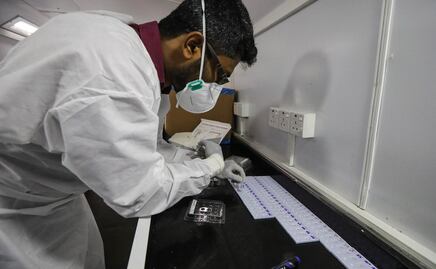
After a preliminary evaluation, Thailand determined "that the risk of importing the disease is low, given that the incident in Russia is limited to a specific area," says the document released this week by the DDC.
The US government issued an alert on Sunday regarding a possible pneumonic plague outbreak in the Siberian region of Irkutsk, something that has not been confirmed by Moscow, which instead called on Monday "not to pay attention to rumors and speculations."

For its part, the independent Russian channel Liudi Baikala (People of Baikal) reported that some hospitals in Irkutsk had been quarantined due to the incident.
In Thailand, for the moment, authorities consider it unnecessary to tighten travel or flight restrictions or to implement special checks at the country's points of entry.
MONGOLIA ORDERS SURVEILLANCE AT THE BORDER WITH RUSSIA
For its part, Mongolia announced this Wednesday that it had ordered "health surveillance" measures at its border with Russia.
"Although the current risk level is low, the Ministry of Health has instructed the relevant agencies to take precautionary measures and maintain continuous surveillance and monitoring in order to prevent potential risks," the Mongolian government stated, as reported by the AFP agency.
The DDC remarked that, because it is a dangerous and highly serious communicable disease, if there were any indication of its presence in the country, it must be reported urgently in order to take control measures.
'Yersinia pestis'—a bacterium that is transmitted between animals and humans through direct and indirect contact—remains present primarily in rural areas of Africa, Asia, and the Americas, according to the United States Centers for Disease Control and Prevention.

[Publicidad]