

Recommended

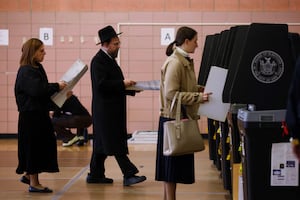

When polling stations close in the United States this Tuesday, millions of Americans will see television networks paint the country's map in Republican red and Democratic blue long before authorities have finished counting the votes.

Election night will be decisive for President Donald Trump, who is staking the Republican majority in Congress against polls that point to a clear victory for the Democratic opposition.
But the results announced by the media will not be official; they are journalistic projections that respond to a peculiarity of the US system: there is no single, fast, and centralized national recount.
Recommended

Fifty systems
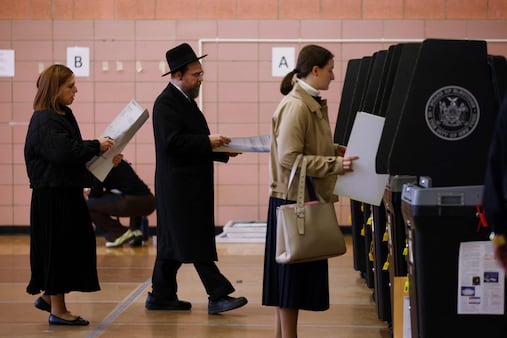
Each of the 50 states and the District of Columbia organizes its own elections, without a federal authority to centralize ballots and announce results.
Furthermore, each state, county, and municipality applies its own rules regarding voting, voter identification, mail-in ballots, and counting.
This fragmentation explains why the official count can drag on for days or even weeks, as happened in the 2020 presidential election, when several key states took days to complete the count due to the high volume of mail-in ballots during the COVID-19 pandemic.

From the ballot to the screen
Once the polling stations are closed, the ballots are verified and scanned or counted by hand. Afterward, the results are transferred to the election centers in each county, which publish them as the count progresses.
The Associated Press (AP) agency and major television networks—ABC, CBS, CNN, NBC, and Fox News—have their own 'decision desks,' teams that project the winners of each race before the count concludes.
To do this, they cross-reference provisional results from each county with other variables, such as exit polls, historical trends, and the origin of the votes yet to be counted.
The rule is simple: they only call a race when they consider that the remaining votes can no longer change the final result.
Two centuries of tradition
The first recorded election projection was made by the AP in 1848, when it used the telegraph to announce Zachary Taylor's victory in the presidential election.
Television stations joined in the 1960s, and since then, the race to announce a result first has been part of the spectacle of election night.
But these projections can also generate controversy. In 2020, Fox News announced that Joe Biden had won the key state of Arizona, a forecast that proved accurate but was so premature that it irritated Trump and fueled the debate over when it is safe to call a race.
What to expect tonight?
The first polling stations will close at 6:00 p.m. in Indiana and Kentucky (23:00 GMT), while most states will close between 7:00 p.m. (00:00 GMT Wednesday) and 9:00 p.m. (02:00 GMT Wednesday).
In territories that are clearly decided, the projections are known almost immediately.
In contrast, in the closest races, such as those for the Senate in Georgia, Michigan, North Carolina, Ohio, Texas, Maine, or Alaska, the map could remain incomplete for hours or even days.
The projections have no official validity and do not certify the results—a task that belongs to election authorities—but they allow us to anticipate an image of how the country's political power is shifting.

[Publicidad]