

Recommended


Twenty-five years after 9/11, the Flight 93 National Memorial remembers the 40 passengers and crew who perished in a Pennsylvania field after confronting the hijackers to prevent the plane from being used for an attack similar to those on the Twin Towers and the Pentagon.
The action of the passengers, recorded through calls made from the aircraft and the black box recordings, ended with the deadly crash of the plane about 18 minutes before reaching Washington (the most likely target of the Al-Qaeda terrorists), but it prevented another massacre and potentially saved hundreds of lives.
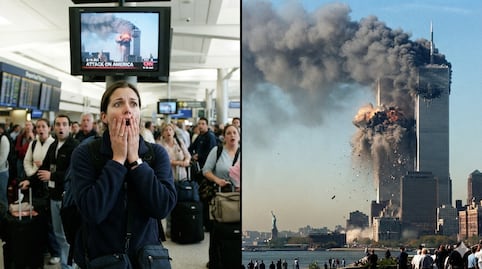
Flight 93 was the only one of the four planes hijacked on September 11, 2001, that did not reach the target set within the worst terrorist attacks in the history of the United States, where some 2,977 people died, excluding the 19 hijackers.
"I believe, as several American presidents have stated, that this was the first counterattack against terrorism" in the country, Stephen Clark, in charge of overseeing the national park that preserves the crash site near the town of Shanksville, about 200 kilometers from Washington, told EFE.
Nothing on that peaceful Tuesday morning seemed to foreshadow the tragedy that was to come. The United Airlines Boeing 757 took off with a delay at 8:42 a.m. Eastern Time from Newark, New Jersey, bound for San Francisco, California. Only four of the 44 people on board knew at that moment that none would return home.
About four minutes later, a first plane struck the North Tower of the World Trade Center in New York, changing the history of the US and the city's skyline forever. At 9:03 a.m., a second aircraft crashed into the South Tower. At 9:37 a.m., a third plane collided with the western wall of the Pentagon.
About 46 minutes after takeoff, the four Flight 93 hijackers went into action, broke into the cockpit, are believed to have killed the two pilots, and took control of the plane.
That delay, combined with the late departure, allowed the passengers and crew to quickly become aware of the situation on the ground. "A total of 13 people made 37 real-time calls to their loved ones and to emergency services operators," Clark explained. "They understood that their plane was going to be used as a weapon."
"(The 40) understood exactly what had happened in New York. And then, when they learned in real time that American Airlines Flight 77 had hit the Pentagon, they united and voted to try to counterattack," added the superintendent of the Western Pennsylvania national parks.
Clark added that thanks to the cockpit voice recordings, it is known that the hijackers knew about the passengers' plan and decided to wait for them to act before bringing the plane down.
"To the cockpit, to the cockpit, or we die!" the voice of what appears to be a passenger is heard in English. Following this, the terrorist pilot maneuvered to try to destabilize those who were rushing the door.
"Just to my right, right here, at 10:03 and 11 seconds, the plane was directly over us completely inverted, moving at 563 miles per hour (about 906 km/h) and at an angle of about 40 degrees. And, in the end, they ran out of time," he recounted.
For Clark, "it is truly extraordinary" that these "ordinary, everyday people resisted" in the face of such a threat.
The Flight 93 National Memorial "is truly special," he indicated about the park, which includes several outdoor exhibits, the Tower of Voices, a wall with the names of the victims, and a small museum where one can follow the chronology of events and listen to chilling final messages from passengers to their families.
25 years after the attacks and as new generations grow up who did not live through or do not remember 9/11, the need to preserve history takes on significant relevance.
"If we forget September 11, or in this case, what happened with Flight 93, I think we would be failing our community and people all over the world. (...) That is why we dedicate a great deal of energy to educating the next generation," insisted Clark.

[Publicidad]