

Recommended
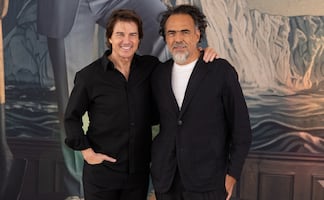



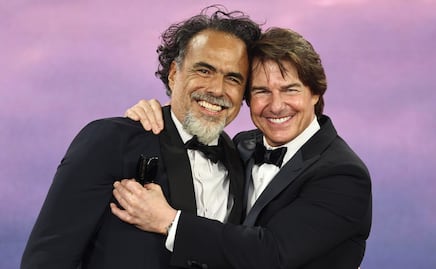
"Digger," the dark comedy starring Tom Cruise and directed by Alejandro González Iñárritu, tanked at the box office in its second weekend and is projecting multimillion-dollar losses for the Warner Bros. studio.
The environmental satire, which features Cruise as an oil tycoon, did not win over critics or audiences and, according to experts, became a risk that was not worth it for the studio that won an Oscar this year with "One Battle After Another."
After two weeks in theaters, the film has grossed $14.4 million in North America and $35.3 million at the global box office, numbers that project losses of around $245 million.
"Financially, it has to be considered a disaster," Christopher Rosen, editor-in-chief of the publication The Ankler, told AFP.
"It cost between $160 million and $180 million, not counting marketing expenses, and it has made practically nothing at the box office," he added.
Daniel Loria, of Boxoffice, points out that the film was approved during the tenure of the outgoing Warner Bros. executives, Pam Abdy and Michael De Luca, who made a name for themselves by granting resources and studio budgets to filmmakers to work on original and innovative movies.
"Sometimes it works, and sometimes it doesn't," commented the analyst.
The downfall of "Digger" comes as the legendary studio is being absorbed by Paramount Skydance, which last week completed the acquisition of Warner Bros. Discovery, a merger that paves the way for a television, news, and film media giant under the control of businessman David Ellison.
- "Auteur" Cinema -
"Digger," experts agree, is an artistic film starring one of the biggest movie stars of all time, but seen through a Latin American perspective.
"This movie was never going to win over a general audience; I don't think it was designed for that," said Loria.
"The film takes every opportunity to push the audience in uncomfortable directions," he adds.
The analyst further emphasizes that it is a production "made by a Latin American filmmaker that critiques the attitudes of the ultra-rich in society and American culture."
American audiences "do not easily accept" films that critique their culture, "especially when they are made by foreigners."
But the expectations generated by the involvement of Cruise, whose hit "Top Gun: Maverick" was part of the post-pandemic box office recovery, further accentuated the decline.
"You have arguably the biggest movie star in the world, Tom Cruise. He was literally everywhere promoting this movie. He was very enthusiastic about the film and about working with Alejandro Iñárritu (...) so, thanks to Tom Cruise's drawing power, the movie had huge visibility," said Paul Dergarabedian, senior media analyst at firm Rentrak.
"Everything he does is going to be under the microscope," he commented.
But this film and this role are very different from Cruise's more recent titles, the star of other successful action films like the "Mission Impossible" franchise.
The numbers, Loria maintained, align with the type of cinema González Iñárritu makes, "less concerned with the box office than with having an artistic intention behind it."
"Unfortunately, it was marketed as a movie for a general audience, when in reality it is auteur cinema," he notes.

[Publicidad]