

Recommended

Are you going to take the U.S. citizenship test in 2026? If so, prepare very well and find out all the civics questions you will be asked and check their answers; help yourself with this updated guide that also contains all the details of the naturalization process.
Obtaining U.S. citizenship is an important goal for thousands of immigrants. To achieve it, naturalization applicants must prepare for an interview with the U.S. Citizenship and Immigration Services (USCIS), during which their knowledge of history and government is evaluated, in addition to their English skills (unless they are entitled to an exemption).
- TAMBIÉN LEE: Viaje a Estados Unidos por primera vez: guía completa con documentos, visa y consejos clave
One of the main questions among applicants for U.S. citizenship is what the exam questions are about, how difficult they are, and how many they must answer correctly to pass.
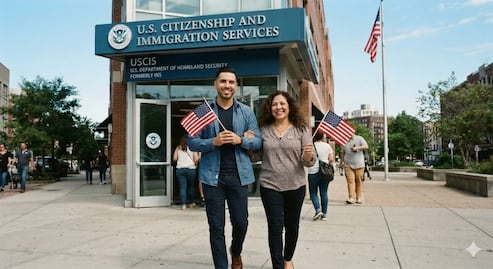
The first thing you should know is that USCIS has two versions of the civics test: the 2008 version and the 2025 version. Which one applies to you depends mainly on when you filed Form N-400, that is, the naturalization application.
The 2025 civics test is what people who filed their naturalization application on or after October 20, 2025, must generally prepare for. This version includes 128 official questions about the history, government, and civic principles of the United States.
How many questions must you answer correctly to obtain U.S. citizenship?
During the interview, the immigration officer will ask up to 20 questions from that list. The applicant must answer at least 12 correctly to pass the civics portion.

What are the 128 questions for the U.S. citizenship test?
The following guide presents the civics questions; the answers are provided to facilitate study, although you must prepare to answer in English:
Principles of the United States Government
1. What is the form of government of the United States?
- República
- República federal basada en la Constitución
- Democracia representativa.
2. What is the supreme law of the nation?
-The Constitution.
3. Name one thing the U.S. Constitution does.
- Forma el gobierno
- Define los poderes del gobierno
- Define las partes del gobierno
- Protege los derechos del pueblo.
4. What does “We the People,” the words the U.S. Constitution begins with, mean?
- Autogobierno
- Soberanía popular
- Consentimiento de los gobernados
- El pueblo debería gobernarse a sí mismo
- Contrato social.
5. How are changes made to the U.S. Constitution?
- Mediante enmiendas
- Mediante el proceso de enmienda.
6. What does the Bill of Rights protect?
- Los derechos básicos de los estadounidenses
- Los derechos básicos de las personas que viven en Estados Unidos.
7. How many amendments does the U.S. Constitution have?
-Twenty-seven (27).
8. Why is the Declaration of Independence important?
- Dice que Estados Unidos está libre del control británico
- Dice que todas las personas son iguales
- Identifica los derechos inherentes
- Identifica las libertades individuales.
9. What founding document declared that the American colonies were free from Great Britain?
-The Declaration of Independence.
10. Name two important ideas from the Declaration of Independence and the U.S. Constitution.
You can mention two of the following:
- Igualdad
- Libertad
- Contrato social
- Derechos naturales
- Gobierno limitado
- Autogobierno.
11. In what founding document do the words “Life, Liberty, and the pursuit of Happiness” appear?
-In the Declaration of Independence.
12. What is the economic system of the United States?
- Capitalismo
- Economía de libre mercado.
13. What is the rule of law?
- Todos deben obedecer la ley
- Los líderes deben obedecer la ley
- El gobierno debe obedecer la ley
- Nadie está por encima de la ley.
14. Name one document that influenced the U.S. Constitution.
- La Declaración de Independencia
- Los Artículos de la Confederación
- Los Documentos Federalistas
- Los Documentos Antifederalistas
- La Declaración de Derechos de Virginia
- Las Órdenes Fundamentales de Connecticut
- El Pacto del Mayflower
- La Gran Ley de la Paz de los iroqueses.
15. Why are there three branches of government?
- Para evitar que una parte se vuelva demasiado poderosa
- Por los controles y equilibrios
- Por la separación de poderes.
System of Government
16. Name the three branches of government.
- Legislativo, ejecutivo y judicial
- El Congreso, el presidente y los tribunales.
17. Which branch of government is the U.S. President in charge of?
-The executive branch.
18. What part of the federal government writes laws?
- El Congreso de Estados Unidos
- La legislatura nacional
- El poder legislativo.
19. What are the two parts of the U.S. Congress?
-The Senate and the House of Representatives.
20. Name one power of the U.S. Congress.
- Escribir leyes
- Declarar la guerra
- Preparar el presupuesto federal.
21. How many U.S. Senators are there?
-One hundred (100).
22. How long is the term of a U.S. Senator?
-Six (6) years.
23. Name one of the current senators from the state where you live.
-The answer depends on the state where you live. You must check who your current senators are.
24. How many voting members are in the House of Representatives?
-Four hundred thirty-five (435).
25. How long is the term of a member of the House of Representatives?
-Two (2) years.
26. Why do representatives serve shorter terms than senators?
-To stay closer to public opinion.
27. How many senators does each state have?
-Two (2).
28. Why does each state have two senators?
- Para garantizar la representación igualitaria de los estados, incluidos los más pequeños
- Por el Gran Compromiso, también llamado Compromiso de Connecticut.
29. Name your national representative.
-The answer depends on the congressional district where you live.
30. What is the name of the current Speaker of the House of Representatives?
-Check USCIS citizenship test updates to confirm the current name.
31. Who does a U.S. Senator represent?
- A los ciudadanos de su estado
- A la gente de su estado.
32. Who elects U.S. Senators?
-The citizens of their state.
33. Who does a member of the House of Representatives represent?
- A los ciudadanos de su distrito congresional
- A las personas de su distrito.
34. Who elects members of the House of Representatives?
-The citizens of their congressional district.
35. Why do some states have more representatives than others?
- Por la población del estado
- Porque algunos estados tienen más habitantes.
36. How many years is the presidential term?
-Four (4) years.
37. Why can the U.S. President only serve two terms?
- Por la Vigesimosegunda Enmienda
- Para evitar que el presidente se vuelva demasiado poderoso.
38. What is the name of the current U.S. President?
-Check USCIS citizenship test updates to verify the current name.
39. What is the name of the current U.S. Vice President?
-Check USCIS citizenship test updates to verify the current name.
40. If the President can no longer serve, who becomes President?
-The Vice President.
41. Name one power of the President.
- Firmar proyectos de ley
- Vetar proyectos de ley
- Aplicar las leyes
- Ser comandante en jefe de las Fuerzas Armadas
- Ser jefe diplomático
- Nombrar jueces federales.
42. Who is the commander in chief of the Armed Forces?
-The President.
43. Who signs bills into law?
-The President.
44. Who vetoes bills?
-The President.
45. Who appoints federal judges?
-The President of the United States.
46. The executive branch has many parts. Name one.
- El presidente
- El Gabinete
- Los departamentos y las agencias federales.
47. What does the President's Cabinet do?
-Advises the President.
48. What are two Cabinet-level positions?
You can mention two of the following positions that appear in the guide:
- Secretario de Agricultura
- Secretario de Comercio
- Secretario de Defensa
- Secretario de Educación
- Secretario de Energía
- Secretario de Salud y Servicios Humanos
- Secretario de Seguridad Nacional
- Secretario de Vivienda y Desarrollo Urbano
- Secretario del Interior
- Secretario del Trabajo
- Secretario de Estado
- Secretario de Transporte
- Secretario del Tesoro
- Secretario de Asuntos de los Veteranos
- Procurador general
- Vicepresidente
- Administrador de la Agencia de Protección Ambiental
- Administrador de la Administración de Pequeñas Empresas
- Director de la Agencia Central de Inteligencia
- Director de la Oficina de Administración y Presupuesto
- Director de Inteligencia Nacional
- Representante comercial de Estados Unidos.
49. Why is the Electoral College important?
- Decide quién es elegido presidente
- Proporciona un compromiso entre la elección popular del presidente y su selección mediante el sistema electoral.
50. What is one part of the judicial branch?
- La Corte Suprema
- Los tribunales federales.
51. What does the judicial branch do?
- Revisa las leyes
- Explica las leyes
- Resuelve disputas sobre la ley
- Decide si una ley va en contra de la Constitución.
52. What is the highest court in the United States?
-The Supreme Court.
53. How many seats are on the Supreme Court?
-Nine (9).
54. How many Supreme Court justices are usually needed to decide a case?
-Five (5), according to the guide.
55. How long do Supreme Court justices serve?
- De por vida
- Hasta su jubilación.
56. Why do Supreme Court justices serve for life?
- Para ser independientes de los políticos
- Para limitar la influencia política externa.
57. Who is the current Chief Justice of the United States?
-Check USCIS citizenship test updates to verify the current name.
58. Name one power that is exclusive to the federal government.
- Imprimir dinero
- Acuñar monedas
- Declarar la guerra
- Crear un ejército
- Suscribir tratados
- Establecer la política exterior.
59. Name one power that is exclusive to the states.
- Proporcionar escuelas y educación
- Proporcionar protección policial
- Proporcionar seguridad mediante los cuerpos de bomberos
- Conceder licencias de conducir
- Aprobar la zonificación y el uso de la tierra.
60. What is the purpose of the Tenth Amendment?
-To establish that powers not granted to the federal government belong to the states or to the people.
61. Who is the current governor of your state?
-The answer depends on the state where you live. You must check the name of the current governor.
62. What is the capital of your state?
-The answer depends on the state where you live.
Rights and Responsibilities
63. There are four amendments to the Constitution about who can vote. Describe one.
- Los ciudadanos de 18 años o más pueden votar
- No se exige pagar un impuesto para votar
- Los ciudadanos pueden votar sin importar si son mujeres u hombres
- Los ciudadanos varones de cualquier raza pueden votar.
64. Who can vote in federal elections, run for federal office, and serve on a jury in the United States?
- Los ciudadanos
- Los ciudadanos estadounidenses.
65. What are three rights that all people living in the United States can exercise?
You can mention three of these rights:
- Libertad de expresión
- Libertad de palabra
- Libertad de reunión
- Libertad para presentar peticiones al gobierno
- Libertad de religión
- Derecho a portar armas.
66. To whom do we show our loyalty when we say the Pledge of Allegiance?
- A Estados Unidos
- A la bandera.
67. Name two promises that new citizens make in the Oath of Allegiance.
- Renunciar a la lealtad a otros países
- Defender la Constitución de Estados Unidos
- Obedecer las leyes estadounidenses
- Prestar servicio en las Fuerzas Armadas si es necesario
- Prestar servicio a la nación si es necesario
- Ser leales a Estados Unidos.
68. How can one become a U.S. citizen?
- Nacer en Estados Unidos bajo las condiciones establecidas en la Decimocuarta Enmienda
- Mediante la naturalización
- Obtener la ciudadanía derivada bajo las condiciones establecidas por el Congreso.
69. What are two examples of civic participation in the United States?
You can mention two:
- Votar
- Postularse a un cargo público
- Unirse a un partido político
- Ayudar en una campaña
- Unirse a un grupo cívico o comunitario
- Dar una opinión sobre un tema a un funcionario electo
- Contactar a funcionarios electos
- Apoyar u oponerse a un asunto o político
- Escribir a un periódico.
70. In what way can Americans serve their country?
- Votar
- Pagar impuestos
- Obedecer la ley
- Servir en el Ejército
- Postularse a un cargo público
- Trabajar para el gobierno local, estatal o federal.
71. Why is it important to pay federal taxes?
- Porque lo exige la ley
- Porque permiten financiar al gobierno federal
- Porque es un deber cívico
- Porque la Constitución contempla la facultad de recaudar impuestos.
72. Why is it important for men between 18 and 25 years old to register for the Selective Service?
- Porque lo exige la ley
- Porque es un deber cívico
- Para que, si se necesita el servicio militar obligatorio, sea justo.
U.S. History: Colonial Period and Independence
73. Colonists came to America for many reasons. Name one.
- Libertad
- Libertad política
- Libertad religiosa
- Oportunidades económicas
- Huir de la persecución.
74. Who lived in what we now know as the United States before the Europeans arrived?
- Los indios americanos
- Los nativos americanos.
75. What group of people was taken and sold as slaves?
- Los africanos
- Personas de África.
76. What war did Americans fight to obtain their independence from Great Britain?
- En la Guerra de Independencia
- En la Guerra de la Independencia estadounidense.
77. Name one reason why Americans declared their independence from Great Britain.
- Los impuestos elevados
- Los impuestos sin representación política
- Los soldados británicos se alojaban en las casas de los estadounidenses
- No tenían autogobierno
- La Masacre de Boston
- El Motín del Té de Boston
- La Ley del Sello
- La Ley del Azúcar
- Las Leyes de Townshend
- Los Actos Intolerables o coercitivos.
78. Who wrote the Declaration of Independence?
-Thomas Jefferson.
79. When was the Declaration of Independence adopted?
-July 4, 1776.
80. Name one important event of the American Revolution.
- La batalla de Bunker Hill
- La Declaración de Independencia
- El cruce de George Washington por el río Delaware y la batalla de Trenton
- La batalla de Saratoga
- El campamento de Valley Forge
- La batalla de Yorktown.
81. There were 13 original states. Name five.
You can mention five of these:
- New Hampshire
- Massachusetts
- Rhode Island
- Connecticut
- Nueva York
- Nueva Jersey
- Pensilvania
- Delaware
- Maryland
- Virginia
- Carolina del Norte
- Carolina del Sur
- Georgia.
82. What national document was drafted in 1787?
-The U.S. Constitution.
83. Name one of the authors of the Federalist Papers.
- James Madison
- Alexander Hamilton
- John Jay
- Publius, seudónimo utilizado por los autores.
84. Why is The Federalist so important?
- Porque ayudó a que las personas comprendieran la Constitución estadounidense
- Porque apoyó la ratificación de la Constitución.
85. Benjamin Franklin is recognized for several things. Name one.
- Creó las primeras bibliotecas públicas y gratuitas
- Fue el primer director del servicio postal de Estados Unidos
- Colaboró en la redacción de la Declaración de Independencia
- Fue inventor
- Fue diplomático estadounidense.
86. George Washington is recognized for several things. Name one.
- Fue uno de los padres fundadores de Estados Unidos
- Fue el primer presidente estadounidense
- Fue general del Ejército Continental
- Fue presidente de la Convención Constitucional.
87. Thomas Jefferson is recognized for several things. Name one.
- Redactó la Declaración de Independencia
- Fue el tercer presidente de Estados Unidos
- Duplicó el tamaño del país mediante la compra de Luisiana
- Fue el primer secretario de Estado
- Fundó la Universidad de Virginia
- Redactó el Estatuto de Virginia para la Libertad Religiosa.
88. James Madison is recognized for several things. Name one.
- Fue conocido como el padre de la Constitución
- Fue el cuarto presidente de Estados Unidos
- Fue presidente durante la Guerra de 1812
- Fue uno de los autores de El Federalista.
89. Alexander Hamilton is recognized for several things. Name one.
- Fue el primer secretario del Tesoro
- Fue uno de los autores de El Federalista
- Colaboró en la creación del Primer Banco de Estados Unidos
- Fue auxiliar del general George Washington
- Fue miembro del Congreso Continental.
U.S. History: The 19th Century
90. What territory did the United States buy from France in 1803?
-The Louisiana Territory.
91. Mention one war in which the United States participated during the 19th century.
- La Guerra de 1812
- La guerra entre México y Estados Unidos
- La Guerra Civil
- La guerra hispano-estadounidense.
92. What was the war between the north and south of the United States called?
-The Civil War.
93. Name one important event of the Civil War.
- La batalla de Fort Sumter
- La Proclamación de Emancipación
- La batalla de Vicksburg
- La batalla de Gettysburg
- La marcha de Sherman
- La rendición de Appomattox
- La batalla de Antietam o Sharpsburg
- El asesinato de Abraham Lincoln.
94. Abraham Lincoln is recognized for several things. Name one.
- Liberó a los esclavos mediante la Proclamación de Emancipación
- Salvó o preservó la Unión
- Lideró a Estados Unidos durante la Guerra Civil
- Fue el decimosexto presidente de Estados Unidos
- Pronunció el Discurso de Gettysburg.
95. What did the Emancipation Proclamation do?
- Liberó a los esclavos
- Liberó a los esclavos de la Confederación
- Liberó a los esclavos en los estados confederados
- Liberó a los esclavos en la mayoría de los estados del sur.
96. Which U.S. war abolished slavery?
-The Civil War.
97. Which amendment states that people born or naturalized in the United States are U.S. citizens, under the corresponding conditions?
-The Fourteenth Amendment.
98. When did all men obtain the right to vote?
- Después de la Guerra Civil
- Durante la Reconstrucción
- Con la Decimoquinta Enmienda
- En 1870.
99. Name one leader of the women's rights movement in the 19th century.
- Susan B. Anthony
- Elizabeth Cady Stanton
- Sojourner Truth
- Harriet Tubman
- Lucretia Mott
- Lucy Stone.
U.S. History: Recent History
100. Mention one war in which the United States participated during the 20th century.
- La Primera Guerra Mundial
- La Segunda Guerra Mundial
- La Guerra de Corea
- La Guerra de Vietnam
- La Guerra del Golfo Pérsico.
101. Why did the United States participate in World War I?
- Por los ataques alemanes contra barcos civiles estadounidenses
- Para apoyar a los Aliados, entre ellos Gran Bretaña, Francia, Italia y Rusia
- Para oponerse a las Potencias Centrales.
102. When did women obtain the right to vote?
- En 1920
- Después de la Primera Guerra Mundial
- Con la Decimonovena Enmienda.
103. What was the Great Depression?
-The longest economic recession in modern history.
104. When did the Great Depression begin?
-With the crisis and stock market crash of 1929.
105. Who was president during the Great Depression and World War II?
-Franklin D. Roosevelt.
106. Why did the United States participate in World War II?
- Por el ataque japonés a Pearl Harbor
- Para apoyar a los Aliados
- Para oponerse a las Potencias del Eje: Alemania, Italia y Japón.
107. Dwight Eisenhower is recognized for several things. Name one.
- Fue general durante la Segunda Guerra Mundial
- Fue presidente al finalizar y durante la Guerra de Corea
- Fue el trigésimo cuarto presidente de Estados Unidos
- Promulgó la Ley de Autopistas Interestatales de 1956.
108. What country was the main opponent of the United States during the Cold War?
- La Unión Soviética
- Rusia.
109. What was the main concern of the United States during the Cold War?
- El comunismo
- La guerra nuclear.
110. Why did the United States participate in the Korean War?
-To stop the spread of communism.
111. Why did the United States participate in the Vietnam War?
-To stop the spread of communism.
112. What did the civil rights movement achieve?
-It fought to abolish racial discrimination.
113. Martin Luther King Jr. is famous for many reasons. Mention one.
- Luchó por los derechos civiles
- Luchó por la igualdad de todos los estadounidenses
- Trabajó para que las personas no fueran juzgadas por el color de su piel.
114. Why did the United States participate in the Persian Gulf War?
-To demand the withdrawal of Iraqi troops from Kuwait.
115. What major event happened on September 11, 2001, in the United States?
- Los terroristas atacaron Estados Unidos
- Secuestraron dos aviones y los estrellaron contra el World Trade Center de Nueva York
- Secuestraron un avión y lo estrellaron contra el Pentágono
- Secuestraron otro avión cuyo objetivo se cree que era Washington D. C.
116. Name one of the U.S. military conflicts after the attacks of September 11, 2001.
- La guerra contra el terrorismo
- La guerra de Afganistán
- La guerra de Irak.
117. Name one Native American tribe in the United States.
You can mention one of these:
- Apache.
- Pies negros.
- Cayuga.
- Cherokee.
- Cheyenne.
- Chippewa.
- Choctaw.
- Creek.
- Crow.
- Hopi.
- Hurón.
- Inupiat.
- Lakota.
- Mohawk.
- Mohegan.
- Navajo.
- Oneida.
- Onondaga.
- Pueblo.
- Seminola.
- Seneca.
- Shawnee.
- Sioux.
- Teton.
- Tuscarora.
American Symbols
118. Name one example of American innovation.
- La bombilla
- El automóvil
- Los rascacielos
- Los aviones.
- La producción en cadena
- El alunizaje
- El circuito integrado.
119. What is the capital of the United States?
-Washington D. C.
120. Where is the Statue of Liberty?
- En el puerto de Nueva York
- En Liberty Island.
121. Why are there 13 stripes on the American flag?
-Because they represent the 13 original colonies.
122. Why are there 50 stars on the flag?
- Porque hay una estrella por cada estado
- Porque cada estrella representa un estado
- Porque Estados Unidos tiene 50 estados.
123. What is the name of the American national anthem?
-The Star-Spangled Banner.
124. The first national motto was “E Pluribus Unum.” What does it mean?
- “De muchos, uno”
- “Todos nos convertimos en uno”.
National Holidays
125. What is celebrated on Independence Day?
- La independencia de Estados Unidos de Gran Bretaña
- El cumpleaños del país.
126. Mention three national holidays in the United States.
You can mention three of the following:
- Día de Año Nuevo
- Día de Martin Luther King Jr
- Día de los Presidentes
- Día de los Caídos (Memorial Day)
- Día de la Independencia
- Día del Trabajo
- Día de Colón
- Día de los Veteranos
- Día de Acción de Gracias
- Navidad.
127. What is commemorated during Memorial Day?
-Homage is paid to soldiers who died in combat.
128. What is commemorated during Veterans Day?
- Se rinde homenaje a los miembros de las Fuerzas Armadas estadounidenses
- Se honra a quienes sirvieron a su país en el Ejército.
Can the U.S. citizenship test be taken in Spanish?
As a general rule, the naturalization interview and the English test are conducted in English. However, some people may be exempt from the English requirement due to their age and the time they have been legal permanent residents.

[Publicidad]