

Recommended



Obtaining US citizenship through naturalization is one of the most important goals for millions of permanent residents in the United States. This process allows a person born in another country to acquire all the rights and responsibilities of a US citizen, provided they meet the requirements established by the Immigration and Nationality Act.
Although the process may seem complex, the United States Citizenship and Immigration Services (USCIS) has established a procedure consisting of 10 steps. Before starting the application, it is important to know that applicants must demonstrate continuous permanent residence, pass English, history, and civics exams, and also prove good moral character, compliance with tax obligations, and the absence of any criminal history that would prevent naturalization.
Requisitos básicos para solicitar la naturalización
Those interested must verify that they meet the eligibility conditions. Among the most common requirements are:
Having been a legal permanent resident for at least five years.
Having been a permanent resident for three years if married to a US citizen.
Meeting the minimum physical presence requirements in the United States.
Demonstrating basic knowledge of the English language.
Passing the history and civics exams.
Maintaining good moral character.
Being current with tax obligations.
In some cases, having performed qualifying service in the United States Armed Forces.

Los 10 pasos para obtener la ciudadanía americana
Paso 1. Verifica si ya eres ciudadano estadounidense
Before starting a naturalization application, it is important to determine if you already possess citizenship. Some people acquire it by being born on US soil or by being children of US citizens, even if they were born abroad.
Paso 2. Confirma que eres elegible
The next step consists of reviewing whether all requirements demanded by USCIS are met. The most common path is having maintained permanent residence for five years. Those who meet three years of residence and are married to a US citizen, as well as certain members of the Armed Forces, may also qualify.
Paso 3. Prepara el Formulario N-400
Once eligibility is confirmed, the Form N-400, Application for Naturalization, must be completed. Additionally, it will be necessary to gather supporting documentation, such as:
- Copia de la Green Card.
- Certificado de matrimonio, cuando corresponda.
- Formulario N-426 para solicitantes con servicio militar.
- Evidencia laboral.
- Fotografías tipo pasaporte, si son requeridas.
Paso 4. Presenta la solicitud
The Form N-400 must be submitted to USCIS along with the corresponding documentation and payments. After receiving the application, the agency issues a receipt notice that allows for tracking the case.
Paso 5. Acude a la cita biométrica
If the application continues to advance, USCIS will schedule an appointment for biometric data collection. In this stage, the applicant's fingerprints, photograph, and signature are registered, information which will be used for background checks.
Paso 6. Realiza la entrevista y los exámenes
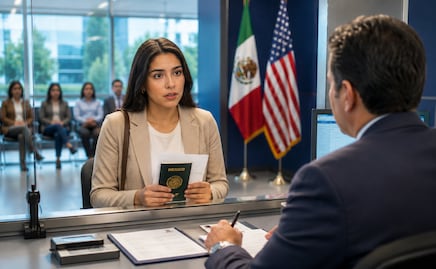
One of the most important moments of the process is the naturalization interview. During this appointment, an officer will review the information presented in the application and evaluate knowledge of English, history, and US civics.
Paso 7. Recibe la decisión de USCIS
After concluding the interview and exams, USCIS will notify in writing if the application was approved, continues under review, or was denied. Those who do not pass any of the tests generally have a second chance to take them.
Paso 8. Espera la invitación a la ceremonia
Approved applicants will receive a notification to attend the naturalization ceremony, an event that marks the final stage of the process.
Paso 9. Toma el Juramento de Lealtad
Citizenship is not officially acquired until the Oath of Allegiance to the United States is taken. During the ceremony, new citizens commit to respecting the Constitution and the country's laws.
At the end, they receive their Certificate of Naturalization, a document that must be checked carefully to confirm that all data is correct.
Paso 10. Conoce tus derechos y responsabilidades
Becoming a citizen implies new opportunities, but also obligations. Therefore, USCIS recommends that new citizens inform themselves about the rights and duties they acquire with their new legal status.
Beneficios de convertirse en ciudadano estadounidense
Naturalization offers significant advantages, including:
- Obtener un pasaporte estadounidense.
- Votar en elecciones federales, estatales y locales.
- Aspirar a determinados cargos públicos.
- Acceder a empleos gubernamentales.
- Participar en jurados.
- Solicitar ciertos programas de becas y apoyos federales.
- Patrocinar la residencia de familiares extranjeros.
- Garantizar la permanencia en Estados Unidos sin riesgo de deportación.
Facilitating the acquisition of citizenship for minor children who meet legal requirements.
Additionally, after the naturalization ceremony, it is advisable to update your immigration status with the Social Security Administration to avoid employment and verification issues.
Las obligaciones de un ciudadano estadounidense
Citizenship also implies commitments to the country, among which stand out:
- Apoyar y defender la Constitución.
- Participar en el proceso democrático mediante el voto.
- Respetar las leyes federales, estatales y locales.
- Respetar los derechos y opiniones de otras personas.
- Participar activamente en la comunidad.
- Declarar y pagar impuestos de forma puntual.
- Servir en un jurado cuando sea requerido.
- Defender al país si las circunstancias lo exigen.
There are different routes to obtain US citizenship, whether through marriage, family ties, military service, or after completing five years as a legal permanent resident.
Join our WhatsApp channel. VIVE USA is now available! Stay informed from your mobile device about the most relevant news regarding travel, work, life in the United States and Canada, celebrities, trends, and much more.

[Publicidad]