

Recommended





Extreme heat and constant climate changes caused by the El Niño phenomenon could kill nearly half a million people in the coming months, according to a group of scientists.
Projections shared in a new report from the Climate Impact Lab indicate that El Niño could cause more than 450,000 deaths due to extreme heat by next February; these deaths are expected to occur worldwide.
- LEE MÁS: ¿Quién es Karen Coronado? La esposa de Aleks Syntek y hermana de la conductora Ingrid Coronado
The report, prepared by the Climate Impact Lab and experts from the University of Chicago, notes that in the coming months, people will die from India to the United States due to the consequences of extreme heat, such as droughts, forest fires, and floods.
The estimate of deaths caused by El Niño covers a period from June 2026 to February 2027, although mortality levels could extend through July 2027.
- NO TE PIERDAS: ¿Qué pasaría si Yellowstone erupciona? El peor escenario contempla hasta 1,300 millones de muertes
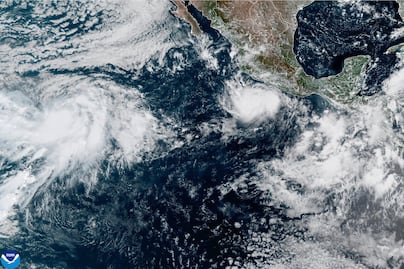
The new forecasts emerged after El Niño exceeded the maximum recorded temperature for the phenomenon in several parts of the planet last Monday, even months ahead of its projected peak.
“The estimated figure of 451,000 people is so large that it can be overwhelming, but it is made up of parents and children, grandparents and neighbors, people who go to work, take care of their families, and live their lives,” said professor and author of the research Michael Greenstone.
Findings from the research suggest that the countries most affected by the effects of El Niño will be some of the most tropical on the planet, such as Nigeria, Indonesia, Sudan, India, and Brazil; within the top 20, the United States would also be one of the most affected nations, with a projection of at least 3,500 heat-related deaths.


Nigeria could have an estimated 31,400 deaths by February; Indonesia, 19,300; Sudan, 17,600; India, 15,670; Brazil, 13,271.
Deaths linked to the effects of El Niño will also occur due to impacts on the food supply, such as acute hunger and rising prices, as well as water shortages.
Michael Greenstone's group explains that El Niño, a phenomenon that is warming the planet 1.2 degrees Celsius above normal, “is a postcard of our future,” which will bring with it a climate crisis in 20 years.
The study's co-author, Dr. Tamma Carleton, points out that the effects of El Niño can be prevented and “many lives can be saved this year,” but in 20 years, extreme temperatures will be the new normal, with constant states of emergency: “We need to mobilize now to design, implement, and evaluate the tools that will save lives in the years to come,” she notes.
“Short-term mortality projections give us an idea of where we are heading if new investments in adaptation do not materialize. The difference with climate change is that there is more time to undertake life-saving adaptations,” the report adds.



[Publicidad]