

Recommended



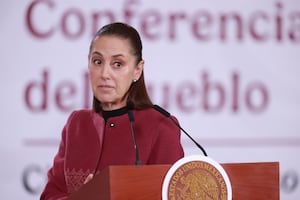
Mexican President Claudia Sheinbaum stated on Tuesday that it is exclusively up to the National Autonomous University of Mexico (UNAM) to decide whether to maintain or cancel the undergraduate entrance exam conducted online, following reports of alleged cheating using artificial intelligence (AI), and maintained that the federal government will only provide support if requested by the institution.
During her morning press conference, the president noted that the priority must be to offer certainty to the thousands of applicants affected by the temporary suspension of the registration process for the 2026-2027 school year, although she stressed that any decision rests with university autonomy.
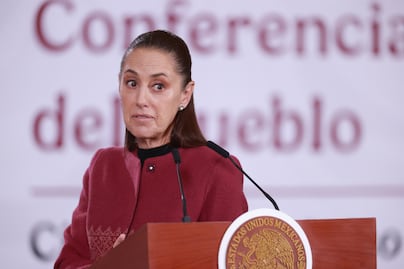
"The UNAM has to resolve two issues within its autonomy. One, how it is going to solve the problem of the exam itself. Whether the exam will not be valid, if it will be valid, if they will administer a new exam (...). That is an issue they have to resolve themselves," she expressed.
The president added that the university must determine quickly what will happen with the test, which was administered remotely for the first time, after irregularities were detected.
"That is an issue they have to resolve for the young people, because young people always prepare for the entrance exam and want to have certainty about what is going to happen now that classes are starting," she stated.
The president's statements come as the UNAM keeps enrollment procedures suspended following the creation of a Technical Commission that is reviewing the selection process and results.
The decision came after students reported alleged anomalies in grades, including perfect scores and unusual increases in the minimum entrance grades for high-demand careers such as Medicine, in addition to the alleged use of artificial intelligence tools during the online assessment.
The controversy led on Monday to a protest by dozens of students and professors in front of the Rector's Tower of the university, where they demanded that the exam be retaken in person with chants such as "Students yes, cheaters no" and "No to fraud."
Sheinbaum considered that the university faces a second challenge: clarifying how the alleged fraud occurred and determining if there was responsibility on the part of the company in charge of administering the exam or some applicants.
"They have to see how this fraud was committed. If the company they hired to conduct the exam participated or if some students used artificial intelligence," she noted.
The president explained that if the investigation reveals the potential commission of a crime, it will be up to the UNAM itself to decide whether to file a formal complaint and request the intervention of the Prosecutor's Office.
"Everything has to be autonomous (...). They are the ones who have to make the decision. And any support they require from the Ministry of Public Education or the (digital transformation) agency, well, of course, but it is just support," she concluded.
The UNAM defended the suspension of the process as a measure to guarantee legal certainty for applicants, while its rector, Leonardo Lomelí, maintained that access to higher education cannot be allowed to be affected by those who have obtained unfair advantages to the detriment of those who prepared for the exam honestly. EFE

[Publicidad]