

Recommended
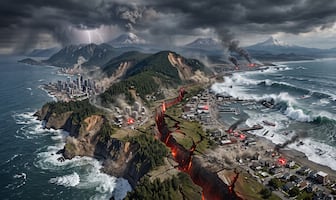
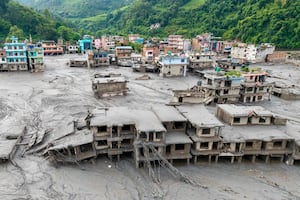
Devotees on a pilgrimage to Mount Kailash—a sacred site in the Himalayas—were among the many people missing following massive floods along the border between Nepal and China.
- TAMBIÉN LEE: Riada en Nepal: ¿qué es y por qué fue tan devastadora? VIDEO
- TAMBIÉN LEE: Nepal y Tíbet enfrentan riesgo de nuevas inundaciones tras riada que dejó 392 muertos y miles de desaparecidos
Below is what you need to know about the mountain and its centuries-old role as a site of pilgrimage.
A sacred mountain for several religious traditions
Mount Kailash is a peak in the Himalayas in southwestern Tibet, near China's borders with Nepal and India. It rises more than 6,400 meters (21,000 feet) above sea level and is located near Lake Manasarovar. Both have long been part of religious and literary traditions in Sanskrit.
The mountain holds sacred significance for Hinduism, Buddhism, Jainism, and the Tibetan Bon tradition. Each links it to distinct sacred beliefs and stories.
According to the International Centre for Integrated Mountain Development, the mountain is considered the home of Shiva, the Hindu god of destruction, and Parvati, a Hindu goddess associated with marriage, fertility, and motherhood.

Followers of the Tibetan Bon tradition consider it a seat of spiritual power and associate the region with Tonpa Shenrab, the founder of the tradition.
Geographer Emily Yeh, a professor at the University of Colorado Boulder who has conducted research in Tibet, wrote in 2017 that Kailash is associated with the mythical Mount Meru, considered the center of the world in Hindu and Buddhist cosmology.
The surrounding landscape also appears in local legends and Himalayan traditions. "Shared Sacred Landscapes," a book published by ICIMOD in 2017, gathers some of them.
One of the stories narrates how Guru Nanak, the founder of Sikhism, visits villagers who long to make the pilgrimage to Mount Kailash. Nanak teaches them that the true pilgrimage is an internal spiritual journey.
Missing pilgrims were traveling to Kailash for a purification journey
Each year, the government of India organizes an official pilgrimage to Kailash and Manasarovar between June and August or September, with routes crossing through the states of Uttarakhand and Sikkim. There are also private operators that organize pilgrimages through Nepal.
Pilgrims usually walk around Kailash rather than climbing it, completing a circuit of approximately 53 kilometers (33 miles) around the mountain.
The journey around the peak is believed to cleanse pilgrims of their sins and can take about three days to complete. According to tradition, Hindus and Buddhists circle the mountain in a clockwise direction, while followers of Bon do so in the opposite direction.
At the nearby Lake Manasarovar, some Hindu pilgrims bathe in its waters as a ritual of spiritual purification.
Yeh wrote that Tibetan pilgrims stop at monasteries and other sacred sites along the route, touching elements believed to have sacred imprints with their prayer beads or foreheads. Other rituals seek to test a pilgrim's merit, sin, or fortune.
Pilgrims among hundreds missing after floods
The death toll from the disaster continues to rise into the hundreds, and authorities in Nepal and China have accounted for well over 1,000 people among the missing.
Among the missing are at least 178 people from India, most of whom were believed to be on a pilgrimage. Also among the missing are people from the United States, Australia, the United Kingdom, and Canada.
Indian spiritual guru Jaggi Vasudev, also known as Sadhguru, said in a post on X that 77 people returning from the mountain with groups organized by his Isha Foundation were at an immigration center in Gyirong, Tibet, when the floods occurred.
The floods occurred after the collapse of a glacier that sent debris downstream to communities on both sides of the border. Similar flash floods have struck the region as rising temperatures increasingly destabilize Himalayan ice.

[Publicidad]