

Recommended
September 11, 2001 marked a turning point not only for United States national security but also for the way millions of people travel within and to the country. The terrorist attacks that destroyed the Twin Towers in New York and damaged the Pentagon triggered a profound transformation in airport controls, immigration processes, and border surveillance systems. Many of the rules that seem normal to travelers today simply did not exist before that date.
Before 9/11, passengers could arrive at the airport just minutes before boarding, family members could accompany them to the boarding gate, and security controls were much more flexible. After the attacks, the U.S. government undertook one of the largest security reforms in its modern history to prevent a similar attack from happening again.
The TSA was born and modern security controls began
One of the most visible consequences was the creation of the Transportation Security Administration (TSA). The agency was established by the Aviation and Transportation Security Act, signed on November 19, 2001, with the mission of strengthening security at airports and other transportation systems.
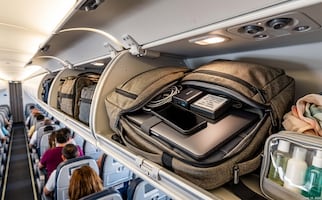
Since then, baggage checks, body scanners, advanced explosive detectors, and the mandatory inspection of checked bags became part of the standard travel process. Cockpit doors for pilots were also reinforced.
The liquid rule that changed how we pack
Probably one of the best-known changes for travelers is the so-called TSA 3-1-1 rule. Currently, passengers can only carry liquids, gels, and aerosols in containers of up to 100 milliliters inside their carry-on luggage, placed in a transparent bag.
Although this measure was implemented several years after 9/11, it emerged as part of the tightening of air security following the attacks, especially after the discovery of a plot to bring liquid explosives onto transatlantic flights in 2006. Since then, items such as shampoo, perfume, toothpaste, and creams have been subject to strict restrictions.
Family members could no longer accompany you to the boarding gate
Another change that many travelers remember is the prohibition of free access to boarding areas. Before 9/11, it was common for family and friends to accompany passengers to the departure gate or meet them directly at the arrivals zone.

After the attacks, access to secure airport zones became restricted practically to ticketed passengers and authorized personnel. Although some airports have recently begun pilot programs to allow certain visitors access again under strict controls, the general rule remains much more restrictive than before 2001.
The immigration system was also tightened
The consequences of 9/11 were not limited to airports. The U.S. government completely reorganized its immigration and border control structure. In 2003, the former Immigration and Naturalization Service (INS) disappeared, and the Department of Homeland Security (DHS) emerged, which currently includes USCIS, CBP, and ICE.
From then on, visa reviews became stricter, and identity, background, and national security database checks were increased. The immigration focus shifted from primarily labor and economic issues to incorporating national security as a priority.
Biometric data and visitor tracking arrived
Another post-9/11 innovation was the mass collection of biometric data from foreigners entering the country. Fingerprints, digital photographs, and automated checks were progressively incorporated into immigration processes to identify those entering and leaving the United States.
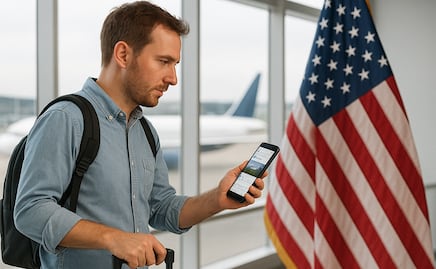
Currently, international travelers are screened via electronic systems that cross-reference passport, visa, and biometric record information with government databases. This level of surveillance simply did not exist before the attacks.
More time at the airport and more documents
Before 9/11, boarding a flight in the United States was a much faster process. Today, it is recommended to arrive several hours in advance for international flights due to security controls, additional inspections, and identity verifications.
Likewise, documentation requirements were made more rigorous, and authorities have much more advanced technological tools to evaluate potential risks before a passenger even arrives at the airport.
What was once a relatively simple procedure became a much more monitored, technological, and regulated process, reflecting how a single event changed traveling in the United States and much of the world forever.
Join our WhatsApp channel. VIVE USA is now available! Stay informed from your mobile device about the most relevant news regarding travel, work, life in the United States and Canada, celebrities, trends, and much more.

[Publicidad]