

Recommended

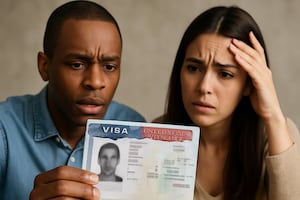

Social media is playing an increasingly important role in immigration procedures for the United States. The Department of State has expanded its review and background check process, which will require certain non-immigrant visa applicants to keep their profiles public to facilitate the evaluation of their applications.
The measure extends the review of online presence to new visa categories that were previously not subject to this level of scrutiny.
According to U.S. authorities, the goal is to use all available information to determine if an applicant meets the requirements for admission to the country and does not pose a risk to national security or public safety.
Which applicants must have their social media public?
According to the Department of State, the social media review will be extended to those applying for visas:
- A-3
- C-3 (cuando se trate de trabajadores domésticos)
- G-5
- H-3
- Dependientes H-4 de titulares H-3
- K-1 (prometido(a) de ciudadano estadounidense)
- K-2
- K-3
- Q
- R-1
- R-2
- S
- T
- U
These categories are in addition to H-1B and H-4 visa applicants, as well as those applying for F, M, and J student and exchange visas, who were already subject to this review.
What will applicants have to do?
U.S. authorities indicated that applicants for these visas must set all their social media profiles to “public” or “open” during the review process.
The measure seeks to facilitate the verification of identity, background, and immigration eligibility. The Department of State noted that it uses all available information during the visa adjudication process to identify individuals who might be inadmissible to the United States.
Why does the United States review social media?
According to the agency, every decision regarding a visa is considered a matter of national security. For this reason, consular officers conduct verification processes to confirm that applicants meet the conditions of the requested immigration classification and that their intended activities match the stated purpose of their trip.
The Department of State maintains that a U.S. visa is a privilege and not a right, so applicants must credibly demonstrate that they meet the requirements established by U.S. immigration law.
¿Pausarán mi cita de visa americana de turista? Esto pasará en México tras anuncio de Estados Unidos

Social media review already existed for other visas
This expansion does not represent the start of digital surveillance in immigration procedures. In June 2025, the United States implemented a more exhaustive review of online presence for F, M, and J student and exchange visitor visa applicants, similarly instructing them to make their accounts public to facilitate the evaluation process.
Subsequently, in December 2025, the measure was expanded to include specialized workers applying for H-1B visas and their dependents with H-4 visas. Now, the new announcement incorporates a much broader list of temporary immigration categories.
Does it affect the B1/B2 tourist visa?
As of now, the Department of State's announcement does not include applicants for the B1/B2 tourist and business visa within the categories subject to this specific expansion of social media review. However, U.S. authorities remind the public that during any immigration process, they may use available information to verify the applicant's identity, background, and eligibility.
For this reason, immigration specialists and travel guidance sources recommend that the information shared on social media be consistent with data provided in forms and consular interviews, as any contradiction could raise questions during the case evaluation.
Join our WhatsApp channel. VIVE USA is now available! Stay informed from your mobile device about the most relevant news regarding travel, work, life in the United States and Canada, celebrities, trends, and much more.

[Publicidad]