

Recommended





Donald Trump threatened on Wednesday to destroy bridges and power plants in Iran for every attack against ships in the Strait of Hormuz, despite pressure over the economic impact of a war that has already cost the United States more than $37 billion.
The resumption of hostilities raises concerns about crude oil and gas supply due to the Iranian blockade of the Strait of Hormuz and the threat of a siege on Saudi Arabian ports by Yemen's rebels, who are allies of Iran.
READ ALSO: Iran warns that "zero hour" is approaching to attack United States forces
The blockade caused oil prices to spike and increases pressure on Trump to seek a way out of a conflict that is already affecting American consumers ahead of highly contested midterm elections.
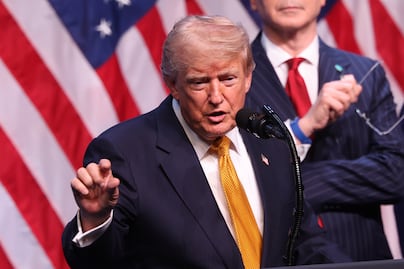
"Every time the Islamic Republic of Iran attacks a ship in the Strait of Hormuz, whether with missiles, drones, or any other type of weapon or ammunition, the United States will bomb and destroy A BRIDGE OR A POWER PLANT," the U.S. president wrote on his Truth Social network.
However, Secretary of State Marco Rubio assured that Washington remains willing to seek a diplomatic solution with Iran.
"We remain open to resolving it through negotiations. But, for now, they don't seem interested in that," Rubio declared at a meeting of Southeast Asian ministers in Manila.
According to Iranian Foreign Ministry spokesperson Esmail Baqai, diplomatic exchanges with Washington through mediators are continuing.
- Guerra impopular -
As the war approaches its five-month mark and with the U.S. elections looming in November, Trump faces intense pressure to end this unpopular conflict.
Critics have pointed to the high cost of the war, which Pentagon chief Pete Hegseth said has soared to $37.5 billion, while defending a request for another $67 billion before Congress.
The president dismissed the polls and stated that "Americans don't want high gas prices but they are not against the war."
On Wednesday, Trump attended a ceremony to receive the remains of four U.S. service members killed in the war, a very sensitive topic for public opinion.
"All of them stated, with great firmness, that we cannot allow Iran to have a nuclear weapon, so we are going to honor them," he declared during the ceremony, in reference to one of the reasons that led to the war which began on February 28 with joint U.S. and Israeli airstrikes.
Trump has asserted that the next U.S. target could be an underground complex in a place called Kuhe Kolang-e Gaz La, near Natanz, where Western intelligence agencies suspect that Iran is building an undeclared uranium enrichment facility.
The Iranian military command (Khatam al-Anbiya) warned that it would consider the attack "an expansion of the war," while the foreign ministry spokesperson stated that "Washington's obsession with Kuhe Kolang, where no nuclear activity is carried out, is nothing more than a fabricated pretext for aggression, destruction, and sabotage."
- Advertencia de los rebeldes de Yemen -
The threats come as Tehran intensifies its attacks against targets in Gulf states allied with Washington.
In Kuwait, the military declared that its air defenses are intercepting drones coming from Iran, while Jordan stated it had shot down four Iranian missiles and four drones.
Air raid sirens also sounded in Bahrain, and an AFP correspondent in Manama heard an explosion.
The Iranian military stated it had attacked U.S. assets in Kuwait and Bahrain, including air defense systems, radar installations, and administrative buildings.
The Iranian Revolutionary Guard also claimed to have attacked U.S. bases in Jordan.
For their part, the Houthis maintain their threat to hinder traffic on the other side of the Arabian Peninsula. That group controls the Bab el-Mandeb Strait, at the southern tip of Yemen, through which ships must pass to reach the Suez Canal.
The London-based International Chamber of Shipping (ICS) confirmed it had registered that the rebels issued a message with warnings to ships in the region.

[Publicidad]