

Recommended




US officials have told several Middle Eastern countries and regional allies to be prepared for a possible resumption of military action against Iran after next week's midterm elections in the United States—as well as the possibility that Tehran might attempt to retaliate against them—according to two diplomats briefed on the matter.
- TAMBIÉN LEE: ¿Una guerra o una crisis global? Por qué varios países recomiendan tener reservas en casa
The two spoke on the condition of anonymity because they are not authorized to comment on the delicate warnings conveyed by US diplomats and defense officials.
- TAMBIÉN LEE: Aviones del fin del mundo: EU activa simulacros nucleares y prepara sus bases para resistir 90 días
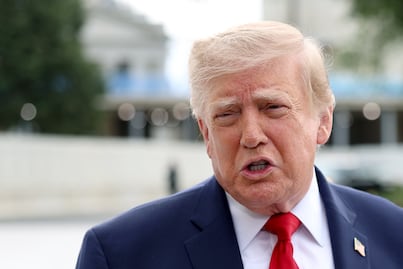
President Donald Trump has not made a final decision on whether to strike Iran again, the diplomats emphasized. However, the president has repeatedly said that he is weighing ordering new military action once the November 3rd elections in the United States conclude.
Recommended

Las 8 razones más comunes por las que el cónsul niega una visa de turista en pocos minutos

Caso Inés Gómez Mont: ¿cómo detecta ICE que una persona se quedó en Estados Unidos más tiempo del permitido?
Hasta 1.5 millones de dólares de multa: Canadá anuncia castigos históricos por fraude en trámites migratorios

Avión que se estrelló en Florida y dejó 9 muertos se estaba rompiendo en el aire, revela investigación
Those threats and the new exhortations from Washington for allies to prepare for possible retaliation are putting the region on alert that a resumption of large-scale operations could be looming.
The White House and US officials declined to comment on the matter.
Iranian Foreign Minister Abbas Araghchi stated on Wednesday on the social network X that Tehran “continues to give diplomacy a chance to succeed,” and is working with mediators to examine ideas that the Iranian government included in a proposal raised last month—flatly rejected by Trump—which the Iranians still want to be the basis for returning to a ceasefire.
Meanwhile, the Ministry of Foreign Affairs of the United Arab Emirates issued a statement in which it urged the parties to “act sensibly and seek political solutions to help contain tensions,” in order to avoid the resumption of large-scale operations in the war that began at the end of February.
The United States has told its regional allies that the new round of military action could last several days, but regional officials are preparing for Iran and its allied groups to retaliate, which would lead to combat that could be more prolonged, the diplomats noted.
US officials have also urged allies to take precautionary measures in expectation that Iran's response will include retaliatory attacks against energy facilities and other critical infrastructure.
It is unclear how soon the US armed forces would be ready.
Although Washington has not attacked Iran since September, the situation in the Middle East has become more complicated.
The conflict has spread: Iran-backed Houthi rebels have attacked oil infrastructure and airports in Saudi Arabia. A coalition led by the Saudi government has responded with its own strikes against Houthi-controlled territory in Yemen.
The Wall Street Journal previously reported that Persian Gulf nations had been told to be prepared for a potential increase in US operations.
It is unclear how soon after election day the US armed forces would be ready to potentially resume strikes.
Late last month, the Pentagon deployed the aircraft carrier Theodore Roosevelt, along with a series of amphibious assault ships with Marines on board—some 9,000 troops in total—from San Diego to the Persian Gulf to reinforce US armed forces in the region.
At the time, a US official indicated that this deployment could lead to an unusually high naval presence of more than 20,000 sailors and Marines—as well as hundreds of aircraft—in the region, something that has only occurred in rare instances over the last two decades. The Navy had three aircraft carrier strike groups in the Middle East in April for the first time since 2003.
On Wednesday night, reports began circulating that Secretary of Defense Pete Hegseth had fired the Pentagon's top military planner. Army Lieutenant General Brett Sylvia was removed from his post as director of strategy, plans, and policy on the Joint Staff, according to a defense official who spoke on the condition of anonymity in exchange for discussing personnel-related matters. The official added that there is no immediate replacement and no reason for his firing has been released.
Trump, who in recent weeks has focused on campaigning for Republicans ahead of the November 3rd elections, has been evasive about what he plans to do next against Iran.
The war has proven to be a heavy burden for Republican candidates as they make their case to voters tired of rising gas prices, a consequence of the war that has raised costs in almost every sector of the global economy.
For US taxpayers, the cost of waging the war against Iran has increased to $47.1 billion, according to the most recent estimate the Pentagon has provided to Congress.
While campaigning for Republicans, Trump has consistently assured voters that the end of the war is near, while simultaneously threatening a potential new round of bombing after the elections.
During a campaign stop on Tuesday in Lubbock, Texas, Trump said the conflict—which has now been going on for eight months—could conclude definitively “in a couple of weeks, if that’s okay with you”.
“Someone asked me earlier: when will the war against Iran end?” Trump noted earlier in the same speech. “I said: ‘When I want it to end.’ It will be very fast, but we have to make it end correctly, with a strong and definitive statement: they will never have a nuclear weapon.”
Trump may be contemplating a post-election timeline for possible action, but the region is on edge at the possibility of Tehran doing something provocative before then, especially if they feel that US action is imminent, said Jonathan Schanzer, senior vice president of the Foundation for Defense of Democracies, a conservative think tank based in Washington.
“Why would they wait until after the election here... if they could initiate it and potentially gain the advantage?” he asked.

[Publicidad]