

Recommended



Thousands of people applying for a US tourist visa have the same doubt: can appearing in the Credit Bureau or having pending debts cause the consulate to reject the application? Although credit history is a cause for concern for many applicants, US immigration rules indicate that the answer is not as simple as people often believe.
According to the US Department of State, the decision on a B1/B2 tourist visa is based primarily on determining whether the applicant meets the requirements for a non-immigrant visa and whether they have the intent to return to their country at the end of their temporary stay.
Does the consulate check your Credit Bureau?
One of the most widespread beliefs is that consular officers check the Mexican Credit Bureau directly to decide whether to approve or reject a visa. However, official information from the US government does not establish that having a negative history in the Credit Bureau is, by itself, a reason for inadmissibility or an automatic cause for denial of a tourist visa.
Recommended



In fact, appearing in the Credit Bureau does not necessarily mean you have financial problems. In Mexico, anyone who has taken out a credit card, a car loan, a mortgage, or any formal financing can be part of that database.
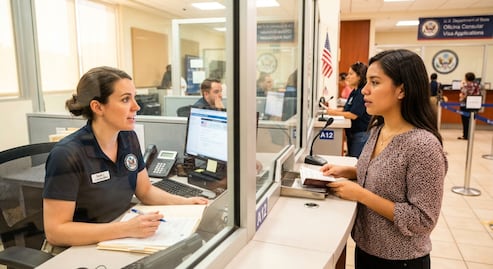
What the consular officer actually analyzes
During the interview, the consul seeks to determine if the trip will be temporary and if the applicant has sufficient ties to their country of residence to return after visiting the United States. Among the elements that are usually considered are:
- Situación laboral actual.
- Ingresos y estabilidad económica.
- Negocio propio o empleo formal.
- Familia que permanece en México.
- Historial de viajes.
- Patrimonio o activos.
- Motivo del viaje.
According to the Department of State, each application is evaluated individually, taking into account the person's full context and not just one isolated factor.
Can debts affect you indirectly?
Although a debt does not constitute an official cause for rejection, it can influence indirectly if it generates inconsistencies during the interview.
For example, if a person claims to have sufficient resources to pay for a vacation of several weeks in the United States, but at the same time is facing a complicated financial situation that they cannot explain adequately, the consular officer could ask additional questions to better understand their circumstances.
The key is not whether or not you have credit, but rather demonstrating that the trip is viable, temporary, and compatible with the applicant's economic situation.
Immigration specialists have pointed out on several occasions that the Credit Bureau history is not part of the official requirements to obtain a US tourist visa. The deciding factor remains the immigration assessment performed by the consular officer, who seeks to verify that the applicant meets the conditions of the requested visa and that they will return to Mexico once the trip is concluded.
For that reason, experts recommend focusing on answering honestly, presenting information consistent with the DS-160 form, and clearly explaining the purpose of the visit to the United States.
Errors that could actually complicate your interview
Beyond debts or credit history, there are factors that tend to cause more concern for consular officers:
- Proporcionar información falsa.
- Presentar documentos alterados.
- Dar respuestas contradictorias.
- No poder explicar el motivo del viaje.
- Ocultar antecedentes migratorios.
- No demostrar vínculos sólidos con México.

These elements carry much more weight in the final decision than a credit score or a pending account with a financial institution.
So, can your visa be denied for being in the Credit Bureau?
In general terms, being in the Credit Bureau does not mean that the US visa will be automatically denied. The rules of the Department of State focus on the applicant's immigration eligibility, the legitimacy of the trip, and the intent to return to their country of residence once their temporary stay is over.
Therefore, if you have current credit, pending payments, or even an imperfect financial history, the most important thing is to properly prepare for your interview, answer with sincerity, and demonstrate that your trip has a legitimate tourist purpose. In most cases, the consul will be more interested in your ties to Mexico and your plans to return than in your situation within the Credit Bureau.
Join our WhatsApp channel. VIVE USA is now available! Stay informed from your mobile device about the most relevant news on travel, work, life in the United States and Canada, celebrities, trends, and much more.

[Publicidad]