

Recommended
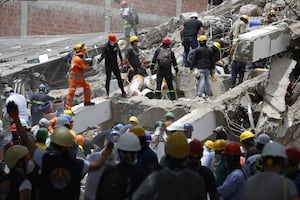

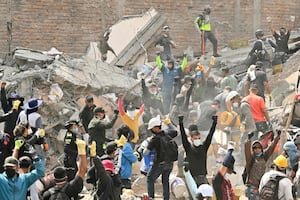

Mexico is one of the countries with the highest seismic activity in the Americas, and every time a strong earthquake occurs, not only does fear resurface, but also dozens of questions about why this type of natural phenomenon occurs in the country; the answer is the Ring of Fire. Do you know what it is? Is Mexico located within it? Experts from the National Autonomous University of Mexico (UNAM) and NASA have spoken about it.
The Ring of Fire (also known as the Circum-Pacific Belt) is the area with the highest seismic and volcanic activity in the world. It measures about 40,000 kilometers long, is horseshoe-shaped, and surrounds the coasts of the Pacific Ocean, covering much of the Americas, Asia, and Oceania.
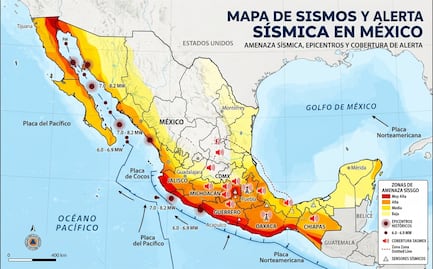
UNAM has explained that Mexico's volcanoes are part of this enormous zone of seismic and volcanic activity around the Pacific Ocean. “This zone has captured the attention of scientists for a long time; in fact, for more than fifty years, it has been known that the different tectonic plates that make up the Earth's surface come together and interact to form this belt,” stated seismologist Raúl Valenzuela Wong, a researcher at the UNAM Institute of Geophysics.
For its part, NASA has also documented, through satellite observations and geophysical studies, how the movements and boundaries between plates produce deformations and earthquakes in different regions of Mexico.
¿México está en el Cinturón de Fuego?
Yes, Mexico is in the Ring of Fire, but not the entire territory—specifically the Pacific coast and the areas where different tectonic plates interact. It is for this reason that seismic activity is not uniform across the entire country.
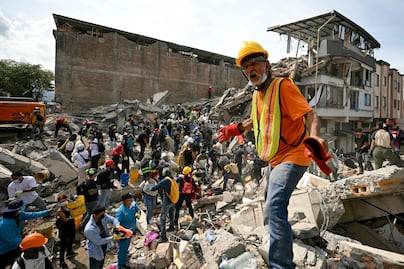
¿Por qué tiembla tanto en México?
UNAM points out that Mexico's seismicity is related to the interaction of five tectonic plates:
- Placa de Norteamérica
- Placa del Pacífico
- Placa de Cocos
- Placa de Rivera
- Placa del Caribe.
These plates shift and interact with each other, and when the energy accumulated in the rocks is suddenly released, an earthquake occurs.
¿Qué estados de México tienen mayor actividad sísmica?
Seismic activity is concentrated mainly in certain regions of the country. According to information from UNAM, the subduction zone that generates a good portion of the earthquakes that affect Mexico mainly covers:
- Jalisco
- Colima
- Michoacán
- Guerrero
- Oaxaca
- Chiapas.
In this region, the Cocos, Rivera, and North American plates interact especially. But that does not mean that only those states can experience earthquakes.
¿El Cinturón de Fuego significa que habrá un gran terremoto en México?
No. Being in a tectonically active region does not allow for the prediction of the exact date, time, or magnitude of an earthquake. The presence of the Ring of Fire explains why there is high seismic and volcanic activity, but it does not mean that scientists can say that a specific earthquake will happen on a specific date.
¿Septiembre es el mes en que más tiembla en México?
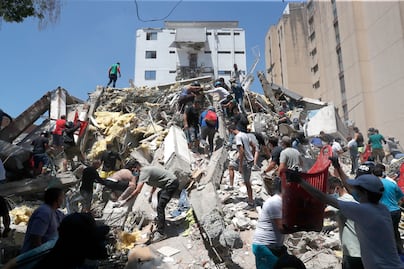
There is no scientific evidence that September is the month in which more earthquakes occur in Mexico. The coincidence of several major earthquakes in September, including those that occurred in 1985 and 2017, has generated a strong social perception.
¿Se puede predecir un terremoto en México?
There is currently no scientific method that allows for the accurate prediction of when an earthquake will occur.
¿Qué hacer durante un sismo?
UNAM recommends:
-Having prevention measures in place and knowing evacuation routes.
-During a seismic movement, it is important to remain calm and move away from windows and objects that could fall.
-After the movement, check for potential damage and stay alert for official information.
-It is also recommended to have an emergency backpack prepared with documents, water, basic food, personal medications, a flashlight, and other necessary items.


[Publicidad]