

Recommended
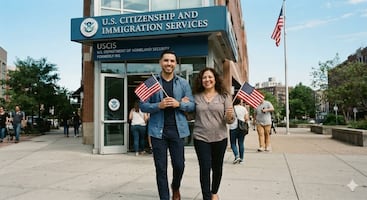


Thousands of people apply every year for the US tourist visa to visit the United States for a temporary period. However, one of the most common questions among travelers is knowing exactly what activities are allowed with this document and which ones could cause problems during the immigration process or even result in a denial of entry to the country.
According to the US Department of State, visitor visas fall into the non-immigrant visa category and are intended for those who wish to stay temporarily in US territory for tourism, business, or a combination of both. The most common categories are the B-1 visa for business activities and the B-2 visa for tourism, although most Mexican applicants receive a combined B-1/B-2 visa.
Before traveling, it is important to understand that this type of visa has specific limits on the activities that can be carried out within the United States. Its correct use can prevent inconveniences during immigration inspection and future visa applications.
What activities does the B-2 tourist visa allow?
The B-2 visa is designed for temporary trips for tourism or personal purposes. Among the activities authorized by the Department of State are:
Taking tourism and recreational trips.
Enjoying vacations in the United States.
Visiting family or friends.
Receiving medical treatment.
Participating in social events organized by fraternal, social, or service organizations.
Taking part in musical, athletic, or similar contests or events as an amateur, provided there is no remuneration.
Enrolling in short-term recreational courses that do not grant academic credit, such as workshops or recreational classes during a trip.
These activities must be temporary in nature and the visitor must demonstrate that they plan to return to their country of residence once their stay is over.

What does the B-1 visa for business allow?
For its part, the B-1 visa is aimed at people traveling temporarily for business-related matters. Although it does not authorize working in the United States, it does allow for certain commercial activities compatible with this immigration category.
Many travelers have B-1/B-2 visas, so they can combine business and tourism activities during the same visit, always within the limits established by US authorities.
Activities that are not permitted with a tourist visa
The Department of State notes that there are several activities that require a different type of visa and cannot be carried out with a visitor visa.
Among the main restrictions are:
Studying in academic programs that require a student visa.
Working or holding paid employment in the United States.
Giving professional presentations or paid performances before an audience.
Entering the country as a member of a ship or aircraft crew.
Working as a foreign journalist in print, radio, television, film, or communication platforms.
Establishing permanent residence in the United States.
Using a tourist visa for unauthorized activities can lead to immigration consequences, including the cancellation of the visa or difficulties in obtaining future immigration benefits.
How to apply for a US tourist visa?
The process begins with filling out the electronic DS-160 form, the official document for applying for a non-immigrant visa. Once completed, the applicant must print the confirmation page and keep it for their consular interview.
It is also necessary to upload a digital photograph that meets official requirements. Subsequently, the applicant must schedule an appointment at the corresponding US embassy or consulate and pay the applicable fees.
Before the interview, it is recommended to gather the necessary documentation, including:
Valid passport.
Confirmation of the DS-160 form.
Proof of application payment, where applicable.
Photograph in the required format, if it could not be uploaded correctly online.
Documents that support the purpose of the trip, the intention to return to the country of origin, and the financial ability to cover expenses.
The interview and consular decision
During the interview, a consular officer will evaluate whether the applicant meets the legal requirements to obtain the visa. In addition, fingerprints will be taken as part of the procedure.
Authorities may request additional documents or determine that the application requires a supplemental administrative process before issuing a final decision. In case of approval, the applicant will receive instructions on how to retrieve their passport with the stamped visa.
Having a visa does not guarantee entry into the United States
An aspect that many travelers are unaware of is that the visa only allows travel to a US port of entry and to request admission to the country. The final decision rests with the officials of Customs and Border Protection (CBP) and the Department of Homeland Security (DHS).
If entry is authorized, the visitor will receive an admission record and may remain in the United States for the time determined by immigration authorities. Therefore, in addition to having a valid visa, it is fundamental to respect the conditions of use of the B-1/B-2 category and demonstrate that the visit has a temporary and legitimate purpose.
Be part of our WhatsApp channel. VIVE USA is now available! Stay informed from your mobile device about the most relevant news regarding travel, work, life in the United States and Canada, celebrities, trends, and much more.

[Publicidad]