

Recommended





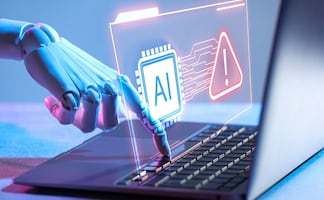
Artificial intelligence (AI) is opening a door as promising as it is unsettling in various aspects of daily life, from the automation of human jobs to its use in geopolitical conflicts.
Recent research claims that artificial intelligence is also touching on medical or biological aspects, and that in the future it could be capable of creating viruses from scratch.
- LEE MÁS: Jennifer Lopez deja sin palabras a sus fans con body transparente y figura de impacto en Nueva York
This fact is setting off alarms worldwide because it would eventually become a tool to combat infections and diseases, but it could also be used to develop biological weapons capable of endangering civilization.
Recommended

Piden pena de muerte para el padre de Meghan Markle por investigación de presunto abuso sexual infantil

Italia en alerta: 6,000 escuelas reciben amenazas de bomba y provocan evacuaciones masivas. VIDEO
Kate Middleton habla de su recuperación del cáncer: “Habrá días buenos y días malos”

UNAM Canadá ofrece cursos de francés en línea: Programa, costo y requisitos 2027

Entrevista de visa americana: Las respuestas que más convencen al cónsul de que regresarás a México después de tu viaje
¿Cuándo la IA superará a los humanos? Investigadores predicen el año en que tomará el control
In addition to this, another dilemma that arises with this technology is who could use it and for what purpose; it is predicted that in the future it would be used for “bioterrorism” that could cause “catastrophic” damage.
- NO TE PIERDAS: ¿Cómo sabe el cónsul si estás diciendo la verdad en tu entrevista de visa? Las claves que analiza en minutos
How would this happen? Below, we tell you what the findings say and how its advancement within the health sciences would affect us.
One of the investigations that has experts worried is related to Evo 2, an AI model developed by scientists at Stanford University and the Arc Institute, which is already capable of generating genetic sequences of viruses.
Although it has been created and improved to support medical treatments and expand scientific knowledge, it is said that it would be a dual-use tool that could fall into the wrong hands.


The potential of this tool is positive, they claim. Specialists could use AI-designed viruses to develop bacteriophages, which are organisms capable of attacking specific bacteria, including some resistant to antibiotics, which could open new possibilities against infections that represent a serious public health problem and cause millions of deaths per year worldwide.
However, the very advancement of AI in this field has raised concerns that its use could be malicious. Anthropic, the company responsible for the Claude model used in these types of developments, reported cases in which some users had attempted to use their AI to investigate topics related to biological weapons.
As announced by the tech company, after reviewing these cases, the accounts of the linked users were suspended and it strengthened its security mechanisms to detect and block potentially dangerous requests.
“These examples illustrate the type of tasks our models are subjected to and the often difficult decisions we must make when assessing whether a given biological use is dangerous or not,” noted the tech company, as quoted by Popular Mechanics.

It added: “When we detect and investigate these cases, we block user accounts and incorporate the results of our investigation into our cutting-edge model's security measures, enforcement, and threat intelligence processes to better prevent, detect, and disrupt these activities in the future.”
For its part, alarms were raised after a 2025 study, which examined the Moremi Bio Agent model, identified that it had no protection mechanisms. According to research cited by The Cool Down, the system generated 1,020 novel toxic proteins and 5,000 toxic small molecules. The results showed similarities to known dangerous substances such as ricin and diphtheria toxin, as well as proteins from snake venom based on disintegrins.
“This research underscores the urgent need to mitigate and safeguard against the dual-use threat posed by AI-based biodesign tools,” note the authors of said research.
Given the serious scenarios that are projected to occur, the leaders of the main AI companies around the world such as Dario Amodei of Anthropic, or the team responsible for OpenAI, in addition to experts in the field and in health and biological sciences, are demanding better regulation of its use, as well as the implementation of security systems to prevent AI from “being misused for bioterrorism.”
So far, it has been proposed that the use of artificial intelligence for the development of these biological tools should only be upon request.


[Publicidad]