

Recommended
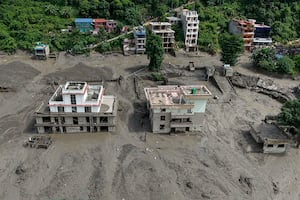
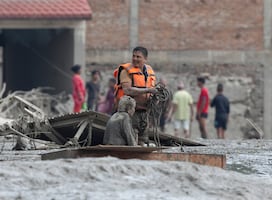
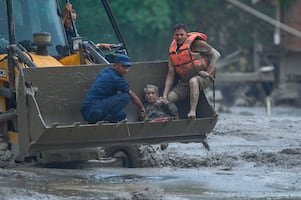
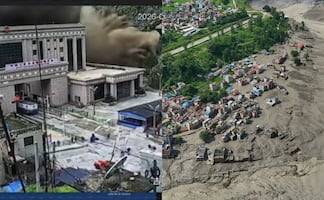
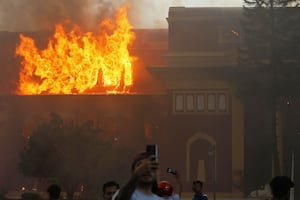
Nepal has suffered an immense flood this Wednesday that hit the north of the country hard, especially the Rasuwa district in Bagmati province, near the border with Tibet, China, which has left at least 160 dead and about 800 missing for the moment.
As rescue efforts continue in this mountainous region of the country, here is the most important information regarding this emergency:
What happened in Nepal?
At around 08:40 local time (02:55 GMT), a glacier collapse about 20 km northeast of the Rasuwagadhi pass (the border between Nepal and China) caused a massive flood of mud and sediment in the Lhende River, according to the National Disaster Risk Reduction and Management Authority (NDRRMA).
The body of water reached the Bhote Koshi River from the Tibetan area around 9:15 local time (3:30 GMT) and struck Timure, Rasuwagadhi, and Syabrubesi with particular force, according to official sources. The water also reached Chinese territory.
Dozens of security camera images show how entire small villages, reservoirs, bridges, and other infrastructure are completely wiped out when the river running through them swells suddenly, while dozens of people run, trying to flee the flooding.
What is the preliminary toll after the flood in Nepal?
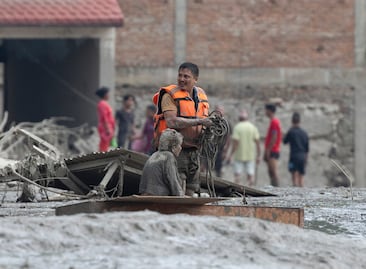
Most of the confirmed victims so far are concentrated in Nepal, where the latest police report, issued at 23:05 local time (17:20 GMT), reported the recovery of 157 bodies in the areas affected by the flood, while Chinese authorities reported three deaths in the Tibetan county of Gyirong, according to an initial count released by the state channel CCTV.
China has also reported 265 missing, while the Nepalese count includes 384 tourists with whom there is no contact—291 foreigners, including two Spaniards, and 93 Nepalese—as well as 44 members of the Army, 28 police officers, 13 members of the Armed Police Force, and 60 workers from various hydroelectric projects.
At least 80 bridges were destroyed (35 vehicular bridges and 45 pedestrian suspension bridges) and the flood caused "serious damage" to the Langtang Khola hydroelectric project facilities, which had just finished construction and were scheduled to begin testing in the coming days, according to what project director Bijay Mohan Bhattarai told the Kathmandu Post newspaper.
What caused the flood in Nepal?
Authorities are still evaluating the origin of the flood, since at first it was considered a possibility that a glacial lake in Tibet had overflowed or burst, but an earthquake has also been cited as having possibly caused this emergency.
Nepal's Minister of Foreign Affairs, Shishir Khanal, stated preliminarily that an earthquake that occurred at 8:37 local time (2:52 GMT) may have caused a large landslide, blocking the river's course and subsequently triggering the flood.
The United States Geological Survey reported a 4.4 magnitude earthquake with an epicenter about 77 kilometers northwest of the Nepalese town of Kodari and at a depth of 10 kilometers, but later revised the event and concluded that it was a 5.2 magnitude landslide and placed its origin about 55 kilometers northwest of Kodari.
How are the rescue efforts going?
The Government of Nepal ordered the mobilization of Army and private company helicopters to rescue the wounded and trapped people, transport them to safe places, and deploy all necessary resources in the area.
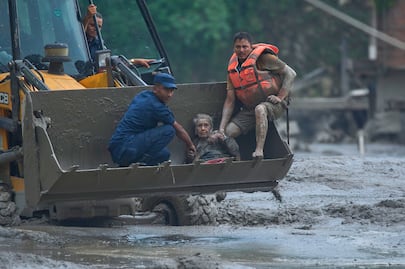
In total, according to the latest NDRRMA report, authorities have rescued 93 people by land and 116 by helicopter.
In addition, the Executive branch declared the areas affected by the Bhote Koshi River flood a disaster zone for three months, and arranged for free medical care for the injured, housing and food for those who have lost their homes, and immediate financial assistance for the families of the deceased, in accordance with current legislation.
The government also ordered the reopening of blocked roads as soon as possible, the restoration of drinking water, electricity, and telecommunications supplies, and the mobilization of resources for the reconstruction of damaged public infrastructure.
Signs of international support following the flood in Nepal
The European Union (EU) activated the Copernicus satellite system on Wednesday to map the affected areas, and European Commission President Ursula von der Leyen said that the bloc is "ready to mobilize more assistance."
"My thoughts are with everyone affected, especially the families who have lost loved ones or who are still waiting for news. We also share a thought for the brave first responders," said Von der Leyen, on X.
Indian Prime Minister Narendra Modi showed his solidarity to his counterpart and assured that his teams "are closely coordinating rescue and relief efforts." Ten tons of Indian aid have already been sent for the tragedy, in which there are more than 170 Indian citizens on the missing list.
Solidarity was also expressed by British Foreign Secretary Ed Miliband, who was "deeply concerned," Germany's Johann Wadephul, and Brazilian President Lula da Silva, who stated that "the images are astonishing and move us all."
The International Federation of Red Cross and Red Crescent Societies (IFRC) has released more than one million euros in emergency funds to support the Nepal Red Cross response. EFE

[Publicidad]