

Recommended








Investigations into whether Nvidia’s chief executive was the target of a “foreign intelligence effort” raise questions about the future of the chipmaker, which became one of the most valuable companies in the world by providing technology that powered the artificial intelligence boom.
Jensen Huang has been synonymous with Nvidia since he co-founded it more than 30 years ago. The company now faces potential damage to its reputation and stock price, uncertainty over a possible successor, and new scrutiny from shareholders and elected officials.
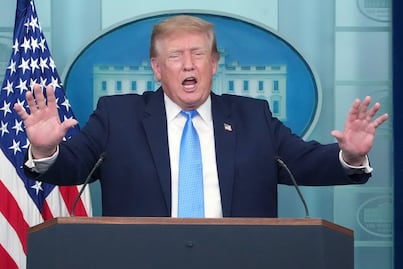
President Donald Trump stated on Monday that the FBI is investigating Huang's relationship with an alleged agent of the Chinese government. But the president indicated that he spoke with the executive and believes that he “had absolutely no idea that the person in question was a spy.”
Recommended
James Gunn deja DC Studios: ¿Qué pasará con Superman y el futuro del universo DC?
Inés Gómez Mont: México busca traerla de regreso tras su detención en Estados Unidos; esto se sabe

Aumentan las hemorragias en bebés en EU: ¿por qué cada vez más padres rechazan la vitamina K?
Meghan Markle reaparece con Harry, pero cancela su discurso tras el arresto de su padre: “No estaba lo suficientemente fuerte emocionalmente”
Jennifer Garner revive su matrimonio con Ben Affleck: “Fue maravilloso” pese a polémicas y rumores de infidelidad

Gaby Spanic sorprende con bikini de impacto a los 52 años mientras se reencuentra con su gemela
¿Cómo sabe el cónsul si estás diciendo la verdad en tu entrevista de visa? Las claves que analiza en minutos

Canadá busca mexicanos para trabajar en tienda de pescadería por $30,000 pesos: Aquí los requisitos

Kim Kardashian impacta con sensual vestido de lentejuelas y aberturas en gala LACMA
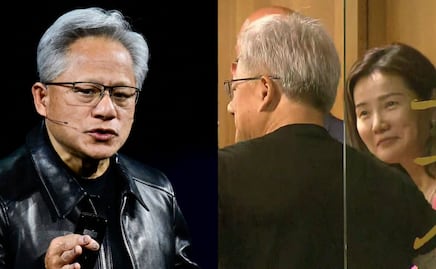
With a valuation of more than $4 trillion, the company has disproportionate importance as a Wall Street colossus and a supplier of chips that AI developers depend on. Law enforcement and members of Congress, as well as Nvidia’s board and shareholders, are asking questions about the relationship. The company’s shares fell more than 4% on Monday and continued to slide Tuesday morning.
Nvidia’s identity has been tied to Huang himself
Huang has noted that he has more than 60 direct reports in a corporate structure that keeps him at the center of decision-making. As the various investigations intensify, the succession plan to replace Huang is unknown.
“The Nvidia board is between a rock and a hard place. They have almost no good options. Jensen is Nvidia,” said David Yoffie, a professor at Harvard Business School. “And if he has done something wrong and needs to be removed and they have no successors, that is a terrible outcome.”
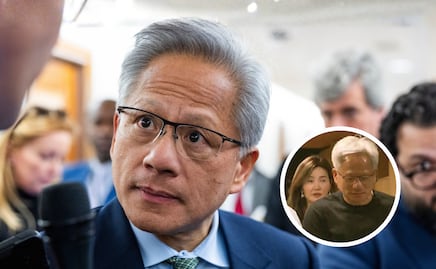
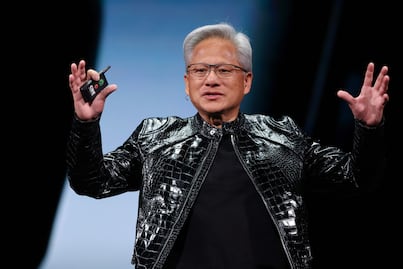
Replacing Huang would be difficult in part because his public profile is so closely associated with Nvidia.
Jeffrey Sonnenfeld, a professor of leadership at the Yale School of Management, compared Huang’s relationship with Nvidia to Steve Jobs’ role at Apple. Down to Huang’s signature leather jacket, like Jobs’ turtleneck, Nvidia is “symbolically and substantively inextricably intertwined around his personal aura.”
Other tech executives, like Oracle’s Larry Ellison and Microsoft’s Bill Gates, have also been deeply intertwined with the success of their companies, making it difficult to separate them. But in those cases, the companies “can still be successful long after the original founders have assumed a lesser role,” argued Dan Morgan, vice president and senior portfolio manager at investment firm Synovus Trust.
If Huang steps down or is removed by the board, speculation about possible replacements has centered on figures like Nvidia co-founder Chris Malachowsky, who is a senior technology executive at the company, and CFO Colette Kress.
Nvidia employs more than 40,000 people worldwide, and within the company there are “many other great leaders,” said Bob O’Donnell, president, founder, and chief analyst at TECHnalysis Research.
“I think it’s important for the company to start letting some of these other people appear as spokespeople so that people feel confident, feel good about Nvidia and its future, even without Jensen,” O’Donnell commented, although he added that he does not think Huang will leave his position.
Huang had the “Midas touch,” but his reputation is at risk
During his 33 years at the helm of Nvidia, Huang built a reputation as a reliable business leader and a consolidated voice within the tech world. He cultivated close relationships with other industry executives, as well as with Trump, which helped persuade him to take a more flexible approach to AI regulation.
“Everyone wanted to have that Midas touch of his when it comes to technology,” O’Donnell stated.
But the scandal is an increasing burden for Huang and Nvidia at a delicate time for the AI industry, after U.S. midterm elections brought a wave of Democrats to power who are promising stricter regulation. Key Democrats, Senator Mark Warner and Representative Hakeem Jeffries, said on Monday that they are interested in investigating further.
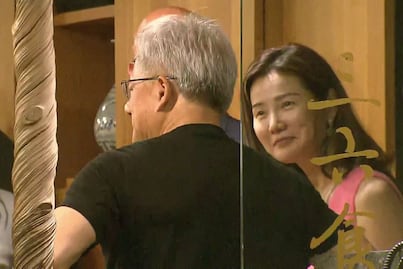

A shareholder sued Nvidia and Huang on Monday, accusing them of misleading investors in their responses to press reports about the executive’s relationship with the alleged Chinese spy. The lawsuit filed in a California court maintains that the company misled investors about Huang’s relationship with Alice Huang, who news reports identified as being suspected of working for Chinese intelligence, and about the implications for national security.
The New York Times identified her as a business executive and Chinese citizen.
Sonnenfeld said he estimates the odds of Huang continuing as chief executive at approximately 50-50, but those odds “are diminishing by the moment.”
“He has lost the trust and credibility of his main stakeholders: his board, his employees,” said Sonnenfeld, who is also the founder and president of the Chief Executive Leadership Institute. “And every employee knows that if anyone else had done this, they would have been fired long ago.”
Some experts are more confident in the company’s future stability. Morgan, of Synovus Trust, indicated that if Huang is required to step aside and take a lesser role at Nvidia following the company investigation, he “remains confident that the company will continue to maintain its leadership in the AI chip market for graphics processing units.”
But at the same time, the relationship “sounds more like a made-for-TV melodrama than a real story,” he added.



[Publicidad]