

Recommended





The Pan American Health Organization (PAHO) recently reported a new epidemiological alert regarding measles in the Americas, with Mexico listed as one of the countries with the highest number of cases.
LEE MÁS: Sarampión en México: ¿En qué estados es obligatorio el cubrebocas? ¿vuelve a las escuelas en CDMX?
In light of this, vaccination against measles is being promoted to prevent outbreaks of this highly contagious disease. According to various health institutions such as the Centers for Disease Control and Prevention (CDC) and the Mexican Social Security Institute (IMSS), inoculation is the most effective measure to protect the population, especially groups at higher risk. The corresponding vaccine is the triple viral vaccine, which protects against measles, mumps, and rubella, known as MMR, according to the Universal Vaccination Program.
¿Quiénes SÍ deben vacunarse hoy contra el sarampión?
The IMSS notes that the highest-risk group that should be vaccinated includes children who are part of the national vaccination schedule. The first dose is generally administered at 12 months of age, while the booster is administered starting at 18 months or at preschool age.
- NO TE PIERDAS: Operación Enjambre: Detienen al alcalde de Tequila, Diego Rivera, por presunta extorsión y vínculos con crimen organizado
The IMSS indicates that children who have not completed their vaccination schedule should also be vaccinated, as well as adolescents who do not have proof of immunization and adults under 49 years of age. The institute stresses that keeping the schedule up to date reduces the risk of community transmission and prevents serious complications associated with measles.
For their part, the CDC recommends that young adults and healthcare workers verify their vaccination schedule, especially if they have never been vaccinated with the MMR vaccine. These are all the people who should be vaccinated against measles:
- Estudiantes en instituciones educativas postsecundarias
- Personal sanitario
- Viajeros internacionales
- Mujeres en edad fértil antes de quedar embarazadas
- Grupos con mayor riesgo de paperas debido a un brote de paperas
The CDC has emphasized that those planning to travel abroad should review their vaccination schedule, as measles continues to circulate in several regions of the world. The organization points out that travelers, international students, and people attending mass events may have a higher probability of exposure to the virus if they do not have adequate protection.
Mexican health authorities also indicate that those who do not have clear records of immunization or have lost their national health card should be vaccinated. In these cases, they recommend going to IMSS, ISSSTE medical units, or state health centers, where medical history can be reviewed and the necessary doses can be administered at no cost in most cases.
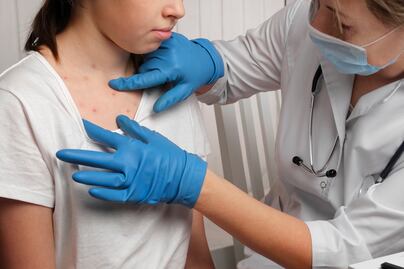
Health institutions emphasize that the measles vaccine in Mexico 2026 is safe, free, and essential to prevent epidemic outbreaks. The Ministry of Health recommends visiting the nearest medical unit for guidance, completing pending schedules, and protecting both the individual population and the community against this preventable disease.
¿Quiénes NO deben vacunarse contra el sarampión en 2026?
Some people should not be vaccinated with the triple viral vaccine or should wait. If you plan to get vaccinated against measles but are not sure if you can do so for health reasons, consult your healthcare professional in these cases:
- Has tenido una reacción alérgica después de una dosis previa de la vacuna MMR o MMRV, o tiene alguna alergia grave que ponga en peligro su vida.
- Estás o podrías estar embarazada. Espera hasta que deje de estar embarazada para vacunarse contra la triple viral. Evita quedar embarazada durante al menos un mes después de recibir la vacuna.
- Tienes un sistema inmunológico debilitado debido a una enfermedad o tratamientos médicos; o tienes un familiar con antecedentes de problemas del sistema inmunológico.
- Has tenido una condición que le haga tener hematomas o sangrar fácilmente
- Has recibido recientemente una transfusión de sangre u otros hemoderivados. Podrían recomendarte posponer la vacunación triple viral durante tres meses o más.
- Tienes tuberculosis.
- Has recibido alguna otra vacuna en las últimas 4 semanas.
- Si te sientes mal o gravemente enfermo, pide recomendaciones a tu doctor de cabecera.
- Además, las personas deben esperar para recibir la vacuna MMRV (sarampión, paperas, rubéola y varicela) e informar a su proveedor si: Tienes antecedentes de convulsiones o tienes un padre, hermano o hermana con antecedentes de convulsiones; estás tomando o planea tomar salicilatos (como aspirina).
¿Cuáles son los efectos secundarios de la vacuna triple viral contra el sarampión 2026?
The possible side effects that may occur with the triple viral vaccine are:
- Dolor, enrojecimiento e hinchazón en la zona en la que se administró la vacuna
- Fiebre
- Erupción leve
- Dolor y rigidez temporales en las articulaciones
- Fiebre alta en casos graves
¿Cuántos casos de sarampión hay en México actualmente?
According to the report from the Secretariat of Health Policies and Population Welfare, as of February 5, 2026, there is a total of 5,221 cumulative probable cases and 1,981 cumulative confirmed cases throughout Mexico.
Jalisco is the state with the most reported cases so far, with 2,092 cumulative probable cases and 1,163 confirmed cases. Mexico City reports a total of 332 probable cases and 112 confirmed cases.
Meanwhile, in the State of Mexico, 161 probable cases and 29 confirmed cases are reported.


[Publicidad]