

Recommended

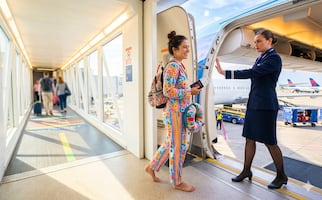

In an increasingly connected world, the power of a passport has become much more than a simple travel document. The ability to enter dozens of countries without needing a visa is today one of the most visible indicators of a nation's international influence, stability, and diplomatic relations.
The most recent Henley Passport Index reveals how global mobility has changed over the last two decades.
The 2026 results show that, despite an international landscape marked by conflicts and geopolitical tensions, freedom of movement continues to expand for millions of people.
According to the report, the average passport currently allows travel to 108 destinations without a prior visa or with a visa on arrival, a figure far higher than the 58 destinations recorded when the ranking was launched in 2006.
Los pasaportes más poderosos del mundo en 2026
Singapore maintains global leadership by offering access to 192 destinations without the need to apply for a visa in advance. In second place are Japan, South Korea, and the United Arab Emirates, with access to 188 destinations.
- Singapur-192 destinos.
- Japón, Corea del Sur, Emiratos Árabes Unidos-188 destinos.
- Suecia – 187 destinos.
- Bélgica, Dinamarca, Finlandia, Francia, Alemania, Irlanda, Italia, Luxemburgo, Países Bajos, Noruega y España – 186 destinos.
- Austria, Grecia, Malta, Portugal y Suiza – 185 destinos.
- Hungría, Polonia y Reino Unido – 184 destinos.
- Australia, Canadá, República Checa, Letonia, Malasia, Nueva Zelanda, Eslovaquia y Eslovenia – 183 destinos.
- Croacia y Estonia – 182 destinos.
- Liechtenstein y Lituania – 181 destinos.
- Islandia y Estados Unidos – 180 destinos.
One of the most notable movements of the year was that of the United Arab Emirates, which climbed three positions since January to share second place with Japan and South Korea.

El ascenso histórico de Emiratos Árabes Unidos
If there is one case that stands out over the last 20 years, it is that of the United Arab Emirates. The country has seen the greatest improvement recorded in the history of the index, adding 153 additional visa-free destinations since 2006.
What was once a mid-table passport transformed into one of the strongest on the planet, thanks to a sustained strategy of international agreements, diplomatic openness, and cooperation with other governments.
For Henley & Partners, this growth demonstrates how foreign relations can have a direct impact on citizens' freedom of movement.
Cómo cambió el poder de los pasaportes en dos décadas
The report also offers a revealing historical perspective. In 2006, the world's most powerful passports were those of the United States, Denmark, and Finland, which allowed entry to 130 destinations without a visa.
Twenty years later, the landscape is completely different. Singapore leads with 192 destinations, and Asia has consolidated itself as one of the regions with the greatest presence among the top spots.
The United States, for example, went from first place to tenth, while the United Kingdom dropped from third to sixth. This reflects a gradual change in the global balance of international mobility and less concentration of travel power among the traditional Atlantic powers.
La brecha entre los que más y menos pueden viajar
Although international mobility has grown for most countries, the report warns that inequality has also increased.
In 2006, Afghanistan was in last place with access to just 12 destinations. The difference between the best and worst passport was then 118 destinations.
Today, Afghanistan remains in the last position, albeit with access to 22 destinations. However, Singapore's lead, with 192 destinations, has increased the gap to 170 destinations, the widest recorded since the index began.
Additionally, Henley highlights a curious fact: Bolivia is the only country in the world that has lost visa-free access in net terms over the last 20 years, reducing its reach by six destinations. The rest of the passports have improved their mobility levels.

¿La paz influye en la fortaleza de un pasaporte?
The analysis also found an important relationship between a country's level of peace and the strength of its passport. Many of the most peaceful nations on the planet, such as Singapore, Switzerland, Ireland, Austria, Finland, Denmark, New Zealand, and Canada, are also among the countries with the greatest travel freedom.
On the other hand, nations affected by persistent conflicts, such as Afghanistan, Syria, and Yemen, possess some of the most limited passports in the world.
However, there are notable exceptions. The United States, Israel, France, the United Arab Emirates, South Korea, Brazil, Mexico, and Russia hold positions in international mobility significantly better than their peace levels would suggest. This indicates that factors such as diplomatic influence, economic weight, and geopolitical relevance can be even more decisive.
Mobility has expanded like never before, but it has also become an increasingly accurate reflection of each nation's influence, alliances, and international weight.
Be part of our WhatsApp channel. VIVE USA is now available! Stay informed from your mobile device on the most relevant news about travel, work, life in the United States and Canada, celebrities, trends, and much more.

[Publicidad]