

Recommended



Obtaining a Green Card through a relative is one of the most common ways to achieve legal permanent residency in the United States. The process is administered by U.S. Citizenship and Immigration Services (USCIS) and allows U.S. citizens and certain permanent residents to petition for immigration benefits for specific eligible family members.
If you are thinking about emigrating legally to the United States through a family petition, this guide explains who can sponsor you, what the requirements are, and what steps you must follow in 2026.
Who can apply for a Green Card for a relative?
According to USCIS, the following sponsors can submit a family petition:
- Ciudadanos estadounidenses
- Pueden solicitar la residencia para:
- Cónyuge.
- Hijos solteros menores de 21 años.
- Hijos solteros mayores de 21 años.
- Hijos casados.
- Padres (si el ciudadano tiene al menos 21 años).
- Hermanos (si el ciudadano tiene al menos 21 años).
- Residentes permanentes legales (titulares de Green Card)
You can apply for residency for:
- Cónyuge.
- Hijos solteros menores de 21 años.
- Hijos solteros mayores de 21 años.
Permanent residents cannot petition for parents or siblings until they become U.S. citizens.
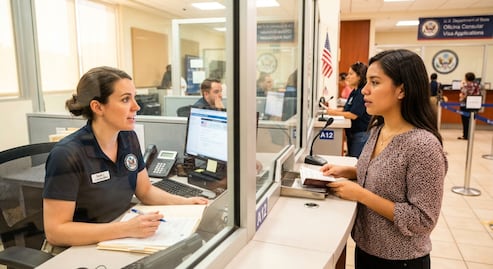
Immediate relatives and preference categories
U.S. immigration law divides family petitions into two main groups.
Immediate relatives
They include:
- Cónyuges de ciudadanos estadounidenses.
- Hijos solteros menores de 21 años de ciudadanos estadounidenses.
- Padres de ciudadanos estadounidenses mayores de 21 años.
A major advantage is that these categories are not subject to annual visa limits, meaning an immigrant visa is always available.
Family preference categories
They include:
- Hijos solteros adultos de ciudadanos estadounidenses (F1).
- Cónyuges e hijos de residentes permanentes (F2A).
- Hijos solteros adultos de residentes permanentes (F2B).
- Hijos casados de ciudadanos estadounidenses (F3).
- Hermanos de ciudadanos estadounidenses (F4).
These categories have limited spots each year, so applicants often face waiting lists that can last several years.
Step 1: File Form I-130
The process begins when the sponsoring relative files Form I-130, Petition for Alien Relative.
According to USCIS, this form is used to prove that a valid family relationship exists between the sponsor and the beneficiary.
It is important to know that approval of the I-130 does not automatically grant a Green Card or immigration status. It simply recognizes that the family relationship is eligible under immigration law.
Step 2: Wait for visa availability (if applicable)
If the beneficiary is considered an immediate relative, they can usually continue with the process as soon as the petition is approved.
In contrast, those who belong to family preference categories must wait for a visa number to become available according to the Department of State.
Step 3: Choose between adjustment of status or consular processing
The next step depends on where the beneficiary is located.
If the relative is inside the United States
They may be eligible to file Form I-485, known as Application to Register Permanent Residence or Adjust Status.
This procedure allows one to apply for a Green Card without leaving the country.
If the relative is outside the United States
The case moves to consular processing through a U.S. embassy or consulate. Afterward, they must complete additional documentation and attend an immigrant visa interview.
Step 4: Attend biometric appointments and interviews
Depending on the case, the applicant may receive an appointment for:
- Toma de huellas digitales.
- Fotografía biométrica.
- Verificaciones de antecedentes.
- Entrevista migratoria.
Authorities use this information to verify the applicant's identity and determine their eligibility for permanent residency.
Step 5: Receive the final decision
If the application is approved, the beneficiary obtains legal permanent residency and receives their Green Card.
From that moment on, they will be able to live and work legally in the United States permanently, provided they maintain the requirements established by immigration law.
Documents usually required
Although each case is different, documents proving the family relationship are generally required, such as:
- Actas de nacimiento.
- Actas de matrimonio.
- Pruebas de ciudadanía estadounidense o residencia permanente del patrocinador.
- Pasaportes vigentes.
- Fotografías.
- Documentos civiles adicionales según el tipo de relación familiar.
How long does the process take?
Times vary significantly depending on:
- El parentesco.
- La categoría migratoria.
- El país de origen.
- La carga de trabajo de USCIS.
- La disponibilidad de visas.
Immediate relatives usually advance faster because they are not subject to annual visa limits, whereas some family preference categories may require several years of waiting.
Applying for a Green Card through a relative is a process that begins with filing Form I-130 and can continue through adjustment of status or consular processing, depending on where the beneficiary is located.
Although requirements and times vary according to the family category, understanding each stage of the procedure can help you avoid errors and prepare a stronger application for USCIS.
Join our WhatsApp channel. VIVE USA is now available! Stay informed from your mobile device about the most relevant news regarding travel, work, life in the United States and Canada, celebrities, trends, and much more.

[Publicidad]