

Recommended

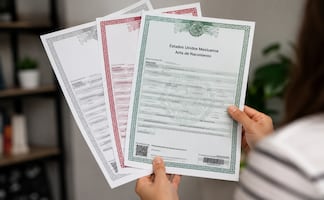

For thousands of people who apply for a tourist visa to the United States, the consular interview is usually the moment that generates the most nerves and uncertainty. However, a former US government official revealed the aspects that consular officers really analyze and the most common questions they usually ask before making a decision.
According to Brent Hanson, a former US consul, the key to the interview is not memorizing perfect answers, but clearly demonstrating that the trip will be temporary and that the applicant has sufficient reasons to return to their home country.
¿Qué buscan los oficiales consulares?
Before the interview, the officer reviews the information provided by the applicant on the DS-160 form, which is a mandatory document for processing a tourist visa.
Based on the data contained in that application, the officer asks questions to verify that the information is consistent and to determine if the person meets the requirements to receive a visa.
Although each case is different, the main objective of the interview is usually to confirm that the applicant will travel temporarily to the United States and has strong ties in their country of residence, such as employment, studies, family, business, or property.

Las cuatro categorías de preguntas más frecuentes
According to Hanson, most of the questions asked by consular officers can be grouped into four broad categories.
1. Intención del viaje
In this part of the interview, they seek to know the reason for the trip and the plans the applicant has within the United States.
Some common questions are:
Where will you be traveling?
What do you plan to do in the United States?
Who will you be visiting?
How long will you stay in the country?
The answers must be clear and consistent with the information declared in the DS-160 form.
2. Lazos familiares y sociales
Another important aspect for consular authorities is to know what ties the person has outside the United States.
Among the most common questions are:
- ¿Con quién vive actualmente?
- ¿Tiene familiares en Estados Unidos?
- ¿Viajará con algún familiar?
- ¿Quiénes permanecen en su país de origen?
The goal is to determine if there are personal reasons that motivate the applicant to return after their visit.
3. Situación económica
Financial stability also plays an important role during the process.
Therefore, it is common for the consular officer to ask:
- ¿Dónde trabaja?
- ¿Desde cuándo tiene ese empleo?
- ¿Cuáles son sus funciones?
- ¿Cuánto gana?
- ¿Quién pagará el viaje?
- ¿Cuenta con ahorros?
These questions seek to verify that the applicant possesses sufficient resources to cover the costs of their stay.
4. Historial de viajes
Immigration history is also considered during the evaluation.
Therefore, the officer might ask:
Have you visited the United States before?
Have you traveled to other countries?
Have you taken similar international trips?
A record of previous travel can help demonstrate that the person is accustomed to complying with the conditions of their temporary visits.
La entrevista suele durar apenas unos minutos
The former diplomat pointed out that, in most cases, the interview does not last longer than three minutes.
In fact, many applications are evaluated after just five or six questions. When the conversation lasts longer than usual, it may indicate that the officer has doubts about some information provided or needs to clarify certain aspects of the case.
Therefore, he recommends preparing solid answers in each of the four mentioned categories to arrive better prepared for the meeting.
La importancia de demostrar vínculos fuertes
US authorities have noted that each application is analyzed individually.
According to information published by Travel.State.Gov:
"When conducting visa interviews, consular officers examine each application individually and consider the applicant's circumstances, travel plans, financial resources, and ties outside the United States, which will ensure the applicant's departure after a temporary visit."
In practical terms, it is usually favorable to have elements that demonstrate roots, such as:
- Un empleo estable.
- Estudios universitarios en curso.
- Negocios propios.
- Propiedades.
- Responsabilidades familiares.
Conversely, the lack of work activity, regular income, or clear commitments in the country of origin can raise doubts about the intentions of the trip.
La coherencia de las respuestas puede marcar la diferencia
One of the most common mistakes during the interview is offering answers that do not match the information previously registered on the DS-160 form.
When the officer detects contradictions, they usually ask additional questions to clarify the situation. This can prolong the interview and increase the applicant's level of nervousness.
If any circumstances changed after completing the form, it is recommended to bring documentation that supports that change. For example, if the person was a student at the time of filling out the application and subsequently got a job, they can present a work certificate to justify the change.
¿La entrevista es en inglés o en español?
Many people believe that speaking English is a requirement to obtain a tourist visa, but it is not.
Consular officers in Mexico are fluent in Spanish and usually conduct interviews in this language. Therefore, experts recommend answering in the language with which the applicant feels most comfortable.
In fact, Hanson suggests starting the conversation with a simple "Buenos días" or "Hola" if you are not fluent in English.
The reason is simple: if the applicant begins the interaction with expressions like "Hello," "Good morning," or "Good afternoon," there is a possibility that the officer will continue the interview in English. If the person is not fluent in that language, they could feel uncomfortable or confused when answering.
La preparación sigue siendo la mejor herramienta
Although there is no guaranteed formula for obtaining a US visa, knowing the topics that consular officers usually address can help you face the interview with greater confidence.
Experts agree that the best strategy is to answer with honesty, remain calm, be clear in each response, and ensure that all information matches what was presented on the DS-160 form. In many cases, those first minutes in front of the officer are enough to determine the outcome of the application.
Be part of our WhatsApp channel. VIVE USA is now available! Stay informed from your mobile device about the most relevant news on travel, work, life in the United States and Canada, celebrities, trends, and much more.

[Publicidad]