

Recommended


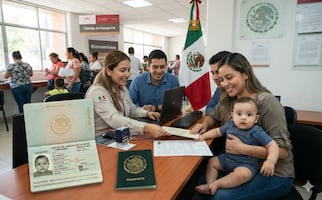
Every year, thousands of people travel, study, work, or reside temporarily in the United States, and one of the most frequent questions revolves around the citizenship of babies born on U.S. soil. Does the simple fact of being born in the United States automatically make a child an American citizen?
The answer is yes in the vast majority of cases, but U.S. legislation provides for some exceptions. According to U.S. Citizenship and Immigration Services (USCIS), the principle of birthright citizenship is protected by the 14th Amendment to the Constitution, which recognizes as citizens those persons born in the country and subject to the jurisdiction of the United States.
However, not all births that occur within the United States automatically generate this right. Children of foreign diplomats accredited to the U.S. government are among the main exceptions.

La regla general: nacer en Estados Unidos otorga la ciudadanía
USCIS points out that a person born in the United States and subject to the jurisdiction of the country is a U.S. citizen from the moment of their birth. This provision applies regardless of the nationality, residence, or immigration status of the parents.
Therefore, the children of tourists, international students, temporary workers, permanent residents, and even people without a regular immigration status usually acquire U.S. citizenship automatically at birth.
¿Qué pasa con los hijos de diplomáticos?
The situation changes when the parents hold official diplomatic status.
According to USCIS, children born in the United States to accredited foreign diplomats do not acquire U.S. citizenship at birth because they are not considered "subject to the jurisdiction of the United States" under the terms established by the 14th Amendment.
This includes, among others, ambassadors, ministers, chargés d'affaires, counselors, secretaries, and other officials who appear on the Diplomatic List.
The reason is that diplomats and their families enjoy special immunities recognized by international law, so they maintain a different legal status than other foreigners living in the United States.
¿Entonces estos niños quedan sin estatus migratorio?
Not necessarily. USCIS explains that people born in the United States to diplomatic parents can access a special mechanism that allows them to register their lawful permanent residence—that is, to obtain a Green Card through a specific procedure provided for in immigration regulations.
Furthermore, if one parent was an accredited diplomat but the other was a U.S. citizen or a U.S. national, the child can indeed be recognized as a U.S. citizen at birth. Although the topic often sparks debate, the exception related to diplomats affects a very small number of births compared to the total registered each year in the United States.
Therefore, the general rule remains that babies born on U.S. soil receive automatic citizenship from birth, while exceptions are limited.

¿Qué derechos tienen los bebés que nacen en Estados Unidos?
Children born in the United States who acquire U.S. citizenship at birth have the same fundamental rights as any other citizen of the country.
Among the main rights are:
Obtaining a U.S. passport, which allows them to travel as U.S. citizens.
Living, studying, and working in the United States without immigration restrictions for their entire lives.
Receiving protection from the U.S. government both within the country and abroad.
Accessing programs and benefits for citizens, provided they meet the requirements established by federal or state law.
Sponsoring certain family members to obtain immigration benefits when they reach the age required by law.
Voting in federal, state, and local elections upon turning 18, provided they register as voters.
Running for certain public offices when they meet the corresponding constitutional and legal requirements.
Transmitting U.S. citizenship to their children in certain cases, in accordance with current immigration and nationality rules.
¿Los padres obtienen beneficios migratorios automáticos?
No. Even if a baby is born in the United States and is a U.S. citizen, their parents do not automatically obtain permanent residence or citizenship. They must complete the corresponding immigration processes established by law.
Furthermore, a U.S. citizen can only request residence for their parents once they turn 21 years old, so the birth of a citizen child does not generate immediate immigration benefits for the parents.
Join our WhatsApp channel. VIVE USA is now available! Stay informed from your mobile device about the most relevant news regarding travel, work, life in the United States and Canada, celebrities, trends, and much more.

[Publicidad]