

Recommended

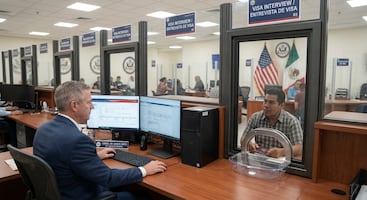

Thousands of foreigners living in the United States are unaware that the government has systems that record a large part of their entries and exits from the country. These records are used to verify compliance with admission conditions, detect potential overstays, and support immigration investigations.
According to official information from the Department of Homeland Security, CBP, the Department of State, and ICE, travel data is part of a tracking system that allows for determining whether a person left the country within the authorized time or if they remained beyond the permitted date.
How does the government know when you enter and leave the United States?
The main tool is the electronic Form I-94, an entry and exit record managed by CBP. This document is generated for most foreign visitors upon entering the United States and contains data such as:
Recommended


- Fecha de ingreso.
- Clase de admisión.
- Puerto de entrada.
- Fecha límite de permanencia autorizada.
- Historial de entradas y salidas.

According to CBP, the agency automatically collects arrival and departure information through electronic travel records provided by airlines, shipping lines, and other border systems.
Additionally, visitors can check their recent travel history online and verify their authorized period of stay through the official I-94 portal.
What role does ICE play?
Although CBP is the agency responsible for recording entries and exits, ICE uses that information to identify potential immigration violations.
When records show that a person remained in the United States after the expiration of their authorized period and there is no evidence of an approved extension or change of status, they may be classified as a potential immigration overstay.
The official DHS overstay report explains that the government compares entry records with exit records to determine if the traveler left the country within the permitted timeframe. It also checks if they obtained an extension of stay or an adjustment of status before USCIS before concluding that an immigration violation exists.
The Department of State also participates
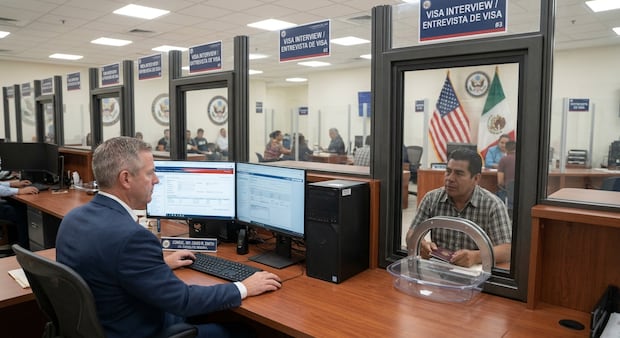
The Department of State, responsible for issuing U.S. visas, maintains information on visas granted to foreigners. This data can be used in conjunction with admission and departure records to verify compliance with immigration conditions.
For example, when a person applies for a new visa, consular officers can review immigration history, including previous entries into the country and potential overstays.
What happens if your departure was not recorded?
CBP warns that, in some cases, land border departures to Mexico or Canada may not be recorded correctly automatically. When this occurs, the immigration history may erroneously show that the person remained in the United States longer than permitted.

Therefore, the agency recommends keeping travel evidence, such as:
- Sellos de entrada a otro país.
- Boletos de transporte.
- Recibos de viaje.
- Comprobantes laborales o de hospedaje.
These documents can help demonstrate that the departure occurred within the authorized period.
Can you check your immigration history?
Yes. The official I-94 system portal allows many travelers to check:
- Su registro más reciente de admisión.
- Historial de entradas y salidas de los últimos 10 años.
- Información sobre cumplimiento de los términos de admisión.
Periodically reviewing this data can help detect errors before they affect future immigration applications or visa processes.
U.S. immigration authorities have electronic systems that record a large amount of international movement. CBP collects entry and exit data, the Department of State keeps information related to visas, and ICE can use those records to investigate potential immigration violations or overstays.
Therefore, if you have had changes in status, extensions of stay, or doubts about your immigration history, it is advisable to check your I-94 record and ensure that all your entries and exits appear correctly in the official systems.
Join our WhatsApp channel. VIVE USA is now available! Stay informed from your mobile device about the most relevant news on travel, work, life in the United States and Canada, celebrities, trends, and much more.

[Publicidad]