

Recommended











What is happening? Amid the multiple survival alerts in the event of catastrophes or wars that have been issued by several countries in Asia and Europe, the United States has reportedly initiated nuclear preparation drills with "doomsday planes."
According to recent reports from the U.S. government, shared by outlets such as the Daily Mail, the U.S. Strategic Command launched the annual Global Thunder 27 exercise, which will involve launching more bombers and support aircraft to fly over the country.
These aircraft will conduct simulation operations in complex scenarios such as nuclear war to test decision-making, communications, and military retaliation.
Recommended

¿Vives en Estados Unidos y cotizaste al IMSS? Así puedes sumar semanas para tu pensión sin volver a México

¿De qué murió Cuauhtémoc Cárdenas a los 92 años? ¿Quién fue el fundador del PRD y tres veces candidato presidencial?

¿Qué dijo AMLO sobre la muerte de Cuauhtémoc Cárdenas? Así reaccionó el expresidente al deceso del líder mexicano

Kim Kardashian vivió una aterradora experiencia con Kanye West en África que marcó el quiebre de su relación

Mary Trump recuerda incómodos comentarios del presidente sobre Ivanka: "Si no fuera mi hija, saldría con ella"

¿Quién fue Cuauhtémoc Cárdenas y cuántas veces compitió por la Presidencia de México?

Candice Swanepoel presume figura irreal con diminuta lencería en campaña publicitaria de VS

¿Viajas a USA? Estados Unidos exigirá nuevo requisito a partir del 3 de noviembre

¿Entraste a Estados Unidos como visitante? 7 datos que debes revisar en tu I-94

Sydney Sweeney impacta con diminuta lencería azul y desata reacciones en Instagram

Canelo Álvarez y otros mexicanos pelean este sábado: horarios y dónde ver EN VIVO

Jennifer Lawrence revela el incómodo momento que vivió al filmar una escena desnuda: “Había hombres no autorizados”
The report explains that this drill will serve to keep nuclear forces prepared, safe, and secure, with the capacity to operate effectively and deter any type of attack.
- NO TE PIERDAS: ¿Estados Unidos se prepara para una guerra mundial? El plan del Pentágono para resistir 90 días
Aircraft tracking data indicates that B-52 bombers have taken off from Minot Air Force Base in North Dakota and headed toward northern territory and the border with Canada.
Meanwhile, several E-6B Mercury aircraft, which function as airborne command and communications centers between national leaders and U.S. nuclear forces, are operating across the country. These aircraft have been dubbed "doomsday planes" and are equipped with specialized gear to communicate with ballistic missile submarines and to support the command of land-based intercontinental missiles.
The initial strategic exercises with the aircraft are set to end in early November; it is currently unclear if these aircraft will continue flying in a second wave.
So far, it is ruled out that the United States is responding to potential threats from other countries or governments, according to the Strategic Command report.

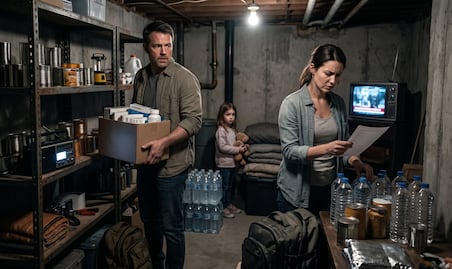
In addition to this, the U.S. government has launched plans to withstand 90 days of nuclear war without electricity, communications, and other basic services.
The Pentagon is preparing military bases to function for 90 days without external support in the event of a new conflict that could paralyze power grids, supply chains, or threaten critical infrastructure on U.S. soil.
"We do not want to depend on standard municipal civilian infrastructure to manage our national defense. We simply cannot. It is an intolerable risk," announced Sean Parnell, a Pentagon spokesperson, in a statement.
Beyond this plan, the Pentagon is laying the groundwork for civilian factories to produce defense material during a potential crisis, and is also looking to secure alternative supply chains and strategic reserves to ensure weapons, fuel, and other front-line materials in a conflict.

Parnell detailed that this plan responds to the FORTRESS initiative, which seeks to ensure that the Armed Forces can continue operating during a world war even with deficiencies or a total loss of electricity or communications.
The Pentagon plans to install portable nuclear reactors, as well as batteries and microgrids, to allow military bases to function. "Power is now a firearm. Without electricity, you lose communications, water, logistics, assembly lines, and even basic military command structures," Parnell highlighted.
"I realized that much of our conception of national defense was based on the antiquated assumption that two oceans would protect us," Parnell noted. "President Trump understands that that world no longer exists and has already paved the way for a new approach: the Golden Dome, a renewed focus on the Western Hemisphere, Greenland, and Panama," he added.


[Publicidad]