

Recommended







Recommendations for preparing emergency backpacks and kits are generating concern in different countries, and several questions are starting to be repeated on social media: Do governments know something we don't yet? Is the third world war about to break out?
Warnings about possible crises, wars, military conflicts, blackouts, and failures in essential services have fueled speculation about an increasingly worrying international scenario.
- NO TE PIERDAS: Alerta de emergencia en Estados Unidos: FEMA interrumpirá la televisión y la radio por esta razón
Tensions between the United States and Iran are one of the main topics related to a new conflict that would affect much of the world, and journalist Tucker Carlson claims that Donald Trump is preparing a nuclear attack in the Middle East soon.
Recommended

¿Por qué salió Inés Gómez Mont de Ventaneando? Así fue su paso por el programa
Gasolina y diésel se disparan en EU: llegan a precios históricos durante las elecciones

¿De qué murió Jesús de Miguel? El futbolista del Tenerife falleció tras un choque en pleno partido
¿Por qué Estados Unidos vota en martes y no en domingo? La tradición que comenzó hace casi 200 años
Hasta 1.5 millones de dólares de multa: Canadá anuncia castigos históricos por fraude en trámites migratorios
Avión que se estrelló en Florida y dejó 9 muertos se estaba rompiendo en el aire, revela investigación

Navidad en Estados Unidos: 5 trenes mágicos que te llevan entre luces, nieve y chocolate caliente

¿Vives en Estados Unidos y tienes problemas con tu estatus migratorio? Así puede ICE rastrear tus entradas y salidas

Influencer Chantel Jeffries deslumbra con bralette de látex y se lleva todas las miradas
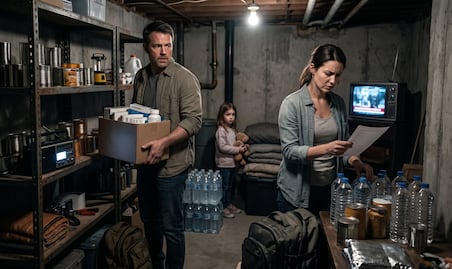
Despite the multiple reports that have emerged regarding notices issued by governments of various countries for their populations to seek shelter and carry a survival kit and a 'survival backpack' in case of potential catastrophes, nothing is yet confirmed.
Mexico has also issued its alert, recommending that Mexicans prepare their 'survival backpack' so that families can face extraordinary situations without immediately depending on help from authorities.
The Secretariat for Integral Risk Management and Civil Protection (SGIRPC) shared a recommendation this weekend to pack basic supplies to survive for at least 72 hours following an emergency.
What should the 'survival backpack' contain?
The 'survival backpack' that Civil Protection suggests having ready should be individual and contain the following basic supplies:
- Lentes de repuesto
- Radio portátil con pilas
- Agua embotellada
- Cobija
- Papel y toallas higiénicas
- Linterna de mano
- Dinero
- Alimento para bebé
- Duplicado de llaves
- Cepillo de pasta y pasta de dientes
- Pañales para bebé
- Plan familia para la prevención de Riesgos
- Silbato y encendedor
- Una hoja de papel y pluma
- Alimentos no perecederos
- Muda de ropa
Europe, Asia, and the United States issue their alerts regarding crises
Concerns about a new catastrophe do not arise from nowhere. On November 3, 2026, the European Commission announced new guidelines to strengthen population preparedness for emergencies.
Among their recommendations is that citizens be able to cover their basic needs during the first 72 hours of a crisis, in addition to having essential items and emergency backpacks. The strategy contemplates different scenarios, from natural disasters and health crises to geopolitical tensions, cyberattacks, and problems in critical infrastructure.
For their part, Asian countries such as Japan and Taiwan have also issued their alerts and survival kit suggestions.
For its part, the United States has multiple plans in case of crises or geopolitical attacks; one of them is an alert test that will be broadcast on November 17, aimed at reviewing the country's operation and capacity to alert its citizens to any crisis.
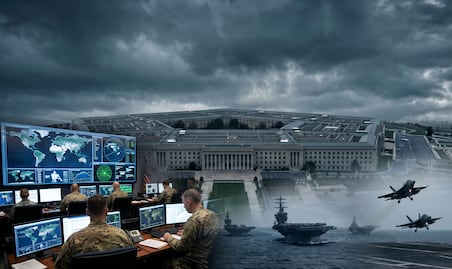
In addition to this, the Pentagon is carrying out a project with which it intends to improve the operation of military forces and enable them to resist 90 days without outside support in the event of a war.
Nordic countries have also developed recommendations so that their inhabitants can sustain themselves for several days. Finland advises storing enough water, food, medicine, and hygiene items for at least 72 hours, while Denmark proposes a similar period of family self-sufficiency.
These measures do not mean that their governments are announcing a war, but rather that they seek to prevent an interruption in electricity, transport, communications, or supply from becoming an even greater crisis.

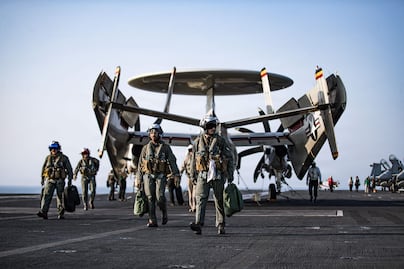
The United States seeks to carry out nuclear attacks against Iran
On October 28, the Associated Press reported that U.S. officials had asked several Middle Eastern allies to prepare for the possibility of new attacks against Iranian territory after this Tuesday, November 3, U.S. legislative elections, as well as possible retaliation against energy facilities and infrastructure.
The situation became even more delicate as November began. The news agency reported on November 3 about limited U.S. strikes against Iranian targets near the Strait of Hormuz, while efforts to reach an agreement continued.
Within this context, journalist and political analyst Tucker Carlson stated that Israel is pressuring the United States for Trump to launch a nuclear attack against Iran.
"Under pressure from Israeli Prime Minister Benjamin Netanyahu, the Trump administration could be days away from launching a nuclear attack on Iran," Carlson wrote in a post on X.
"Netanyahu is cornered and desperate... Netanyahu must stay close to Trump. He needs this war," he added.


[Publicidad]